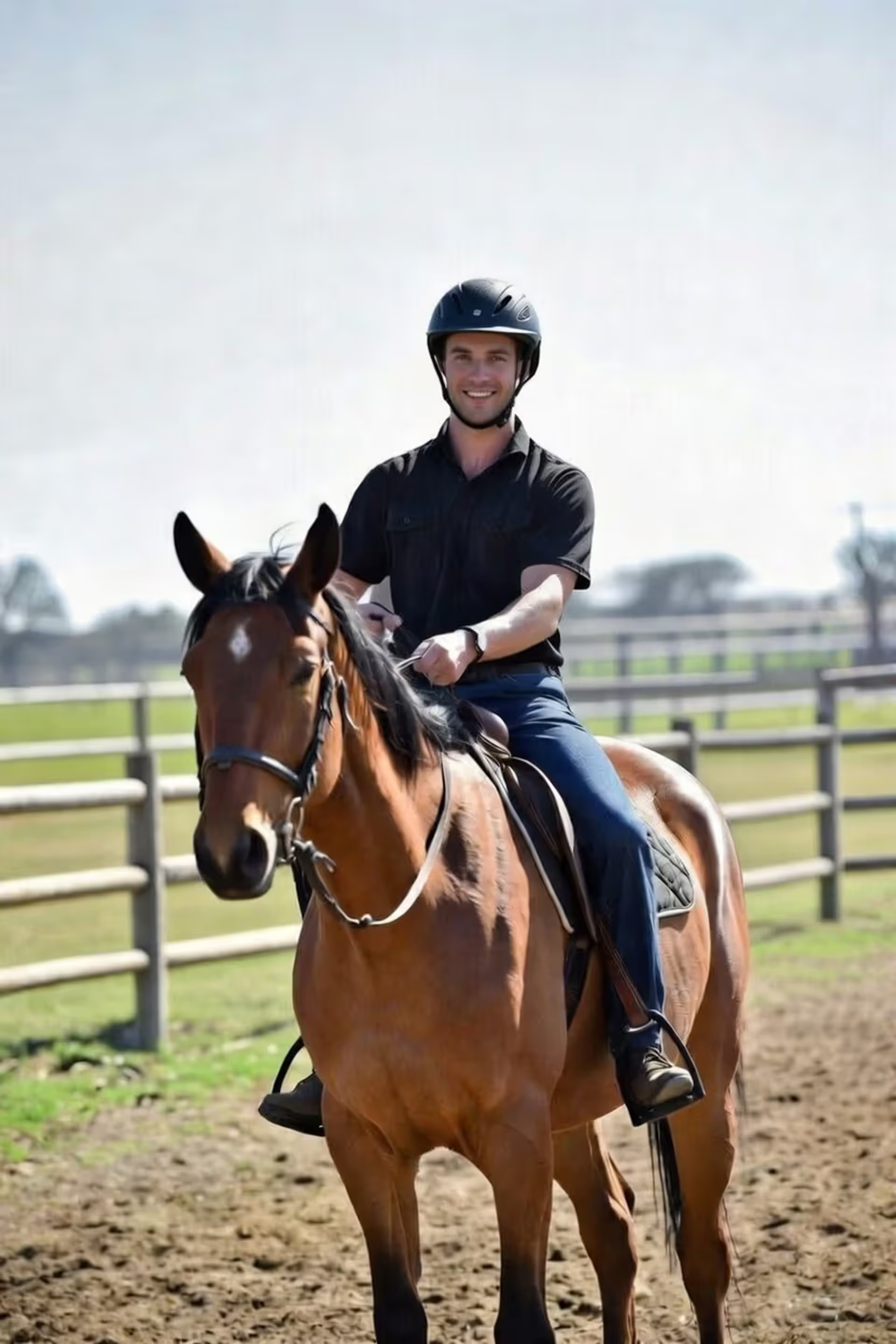
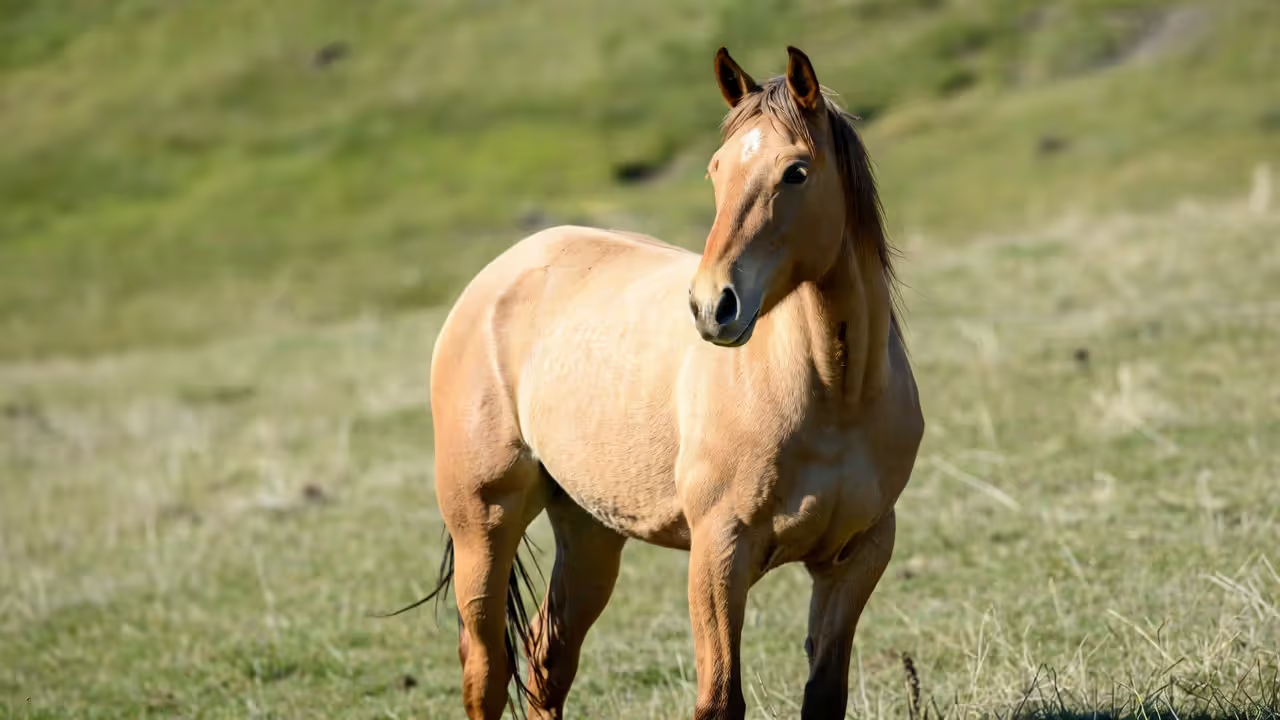
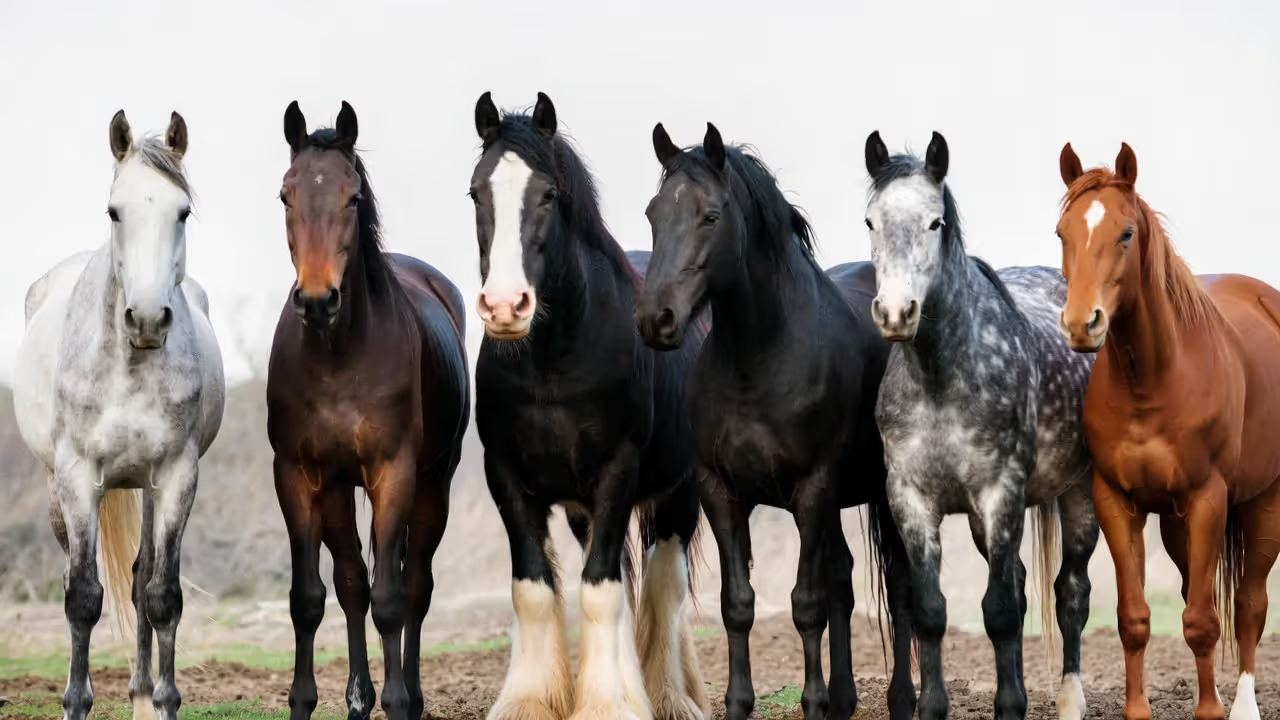
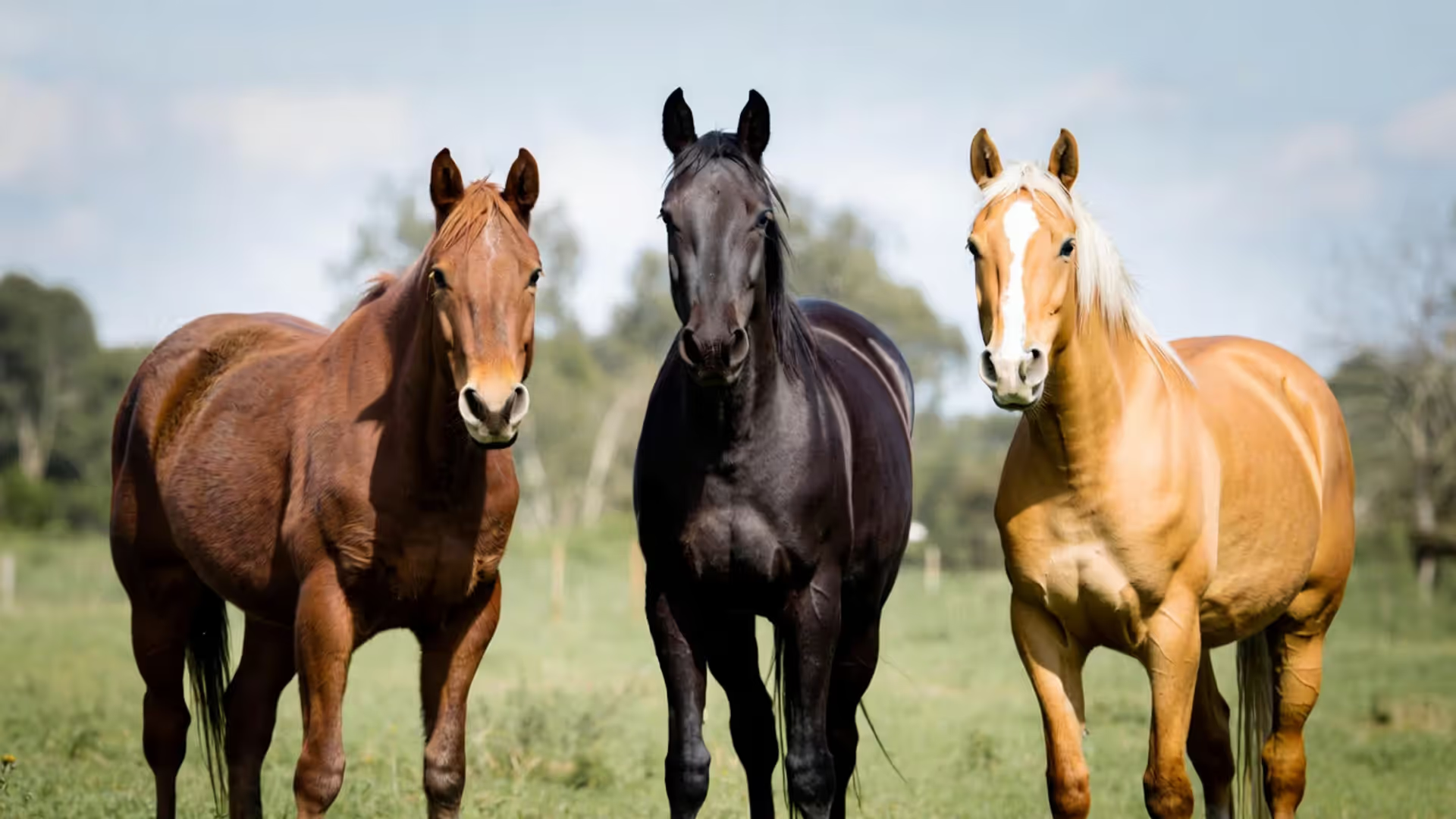
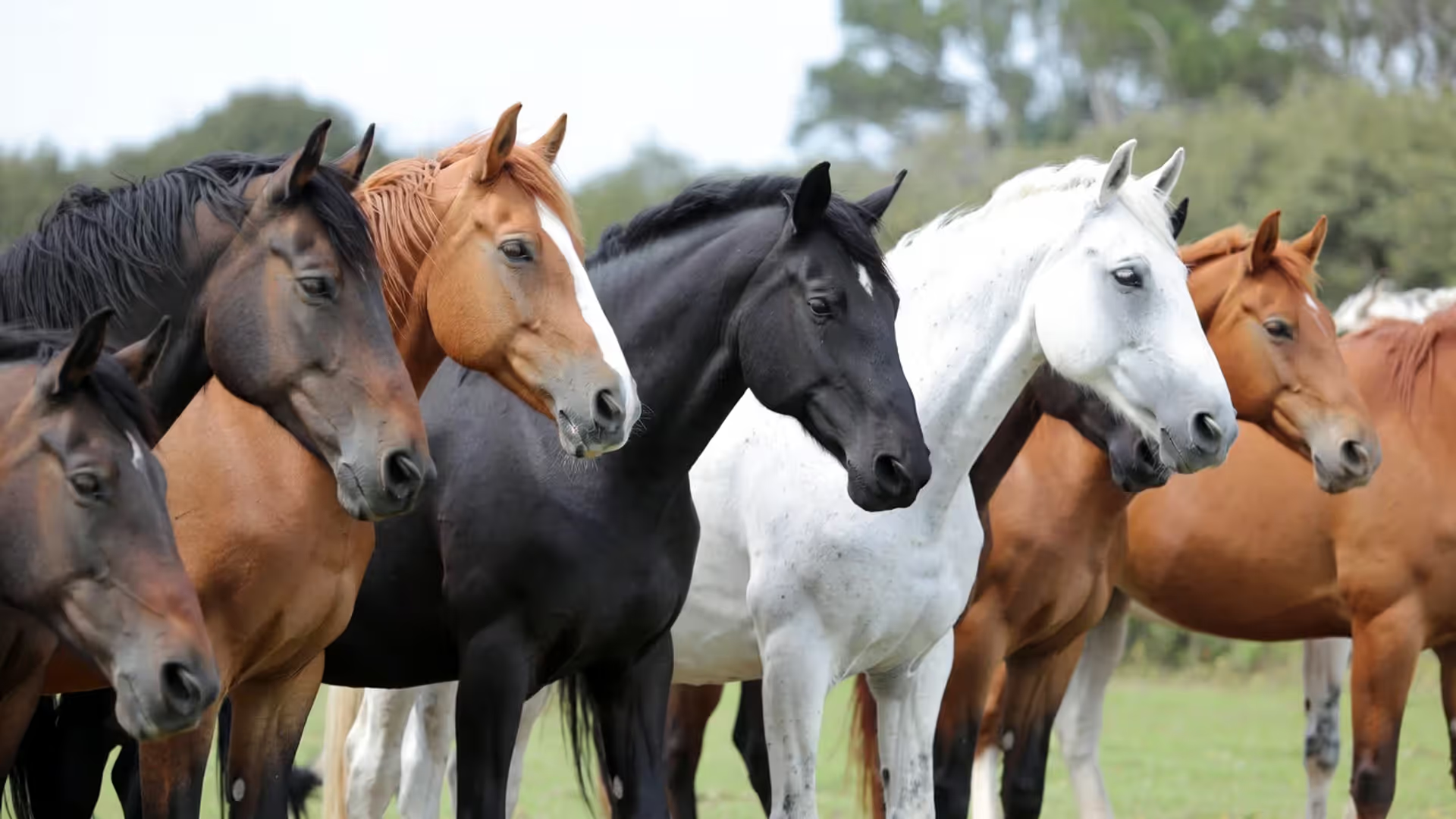
Ever watched someone buy a horse based purely on looks? I've seen it dozens of times. They fall in love with a flashy chestnut Thoroughbred at the barn, write a check, and three months later they're selling it because the horse spooks at every leaf that moves. Meanwhile, their neighbor's plain bay Quarter Horse walks through the same situation like it's nothing. Here's the thing—both horses are gorgeous. One just happens to have a nervous system wired for instant flight responses, while the other thinks things through first.
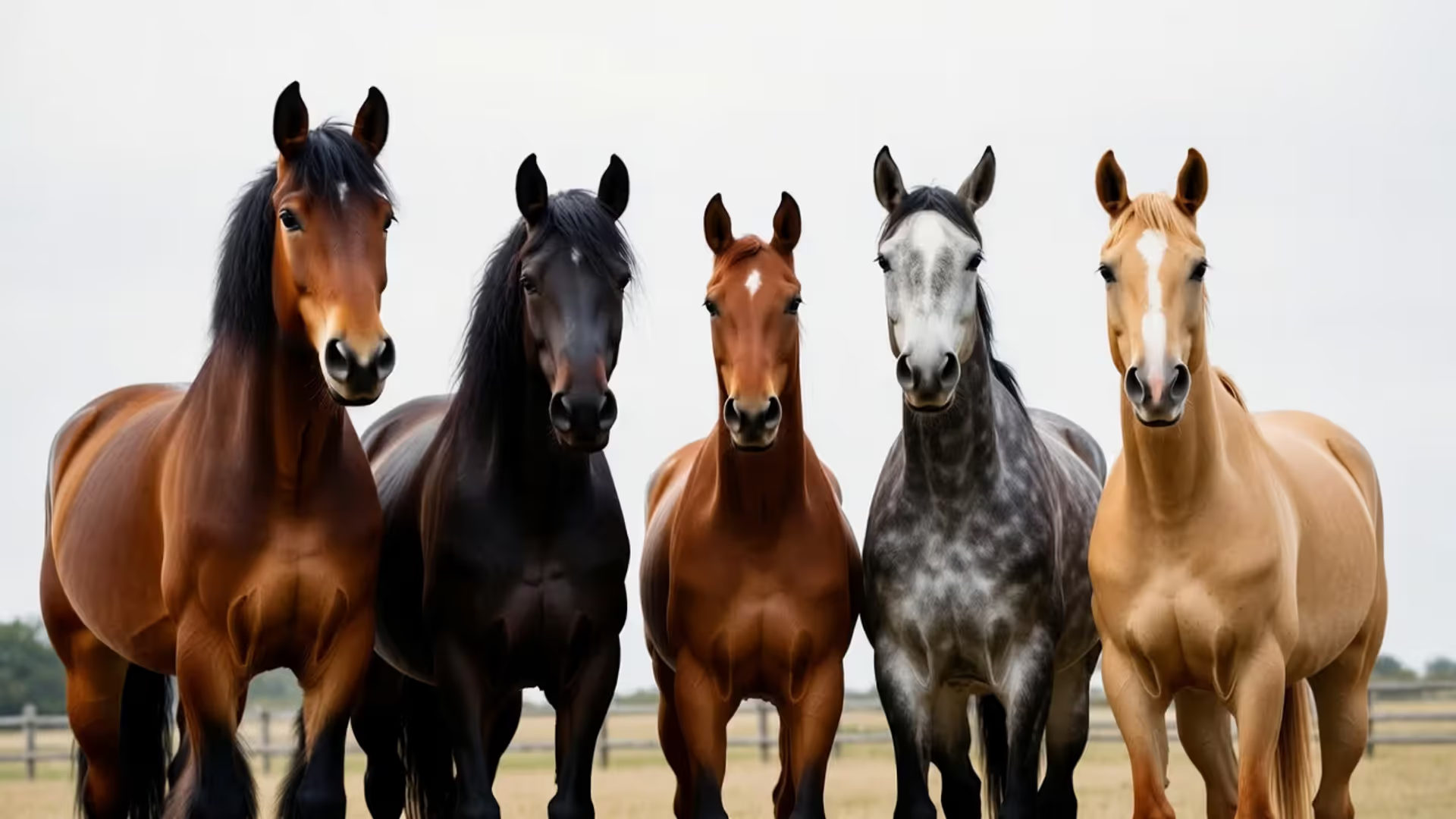
Around 400+ breeds exist worldwide. Some will match your riding style perfectly. Others? They'll drain your bank account and test your patience daily. The differences go way beyond coat color and height.
What Defines a Horse Breed? Understanding Classification and Registration
Three things turn random horses into an official breed. First, you need detailed registry records tracking every single animal. Second, written standards describing exactly what these horses should look like and how they should act. Third, genetic consistency—breed two registered horses together, and you should get predictable results.
Take the American Quarter Horse Association. Their rules? Both parents must already be in the studbook. No exceptions. Your foal's sire and dam both need papers, or that baby doesn't get registered. The Jockey Club does the same thing with Thoroughbreds, except they take it further—they've banned artificial insemination completely. You own a $100,000 stallion? He's breeding naturally with his mares or his offspring don't count. Period.
Not every registry follows these strict rules, though. The Appaloosa Horse Club will register horses showing those distinctive spotted patterns even when one parent lacks papers. They care more about physical traits than pure bloodlines. Different philosophies, different outcomes.
Registration papers boost resale value significantly. They open doors to breed-specific shows. But they don't guarantee quality—I've watched $1,200 grade horses (unregistered animals with unknown ancestry) consistently outperform $15,000 registered ones. Papers document family trees. They say nothing about talent, training quality, or whether that particular horse will work for you.
Grade horses jump the same fences, cover identical trail distances, and bond with owners just as strongly as papered relatives. Three things change: they can't enter breed-specific competitions, their babies can't be registered, and they sell for 30-50% less than comparable registered animals.
Breeds represent more than appearance—they're genetic packages predicting behavior, athletic capability, and health vulnerabilities. These patterns help match appropriate horses to suitable roles and owners.
— Dr. Kathryn Holcomb, Equine Genetics Researcher
15 Most Popular Horse Breeds in America and Their Uses
Light Horse Breeds
American Quarter Horse
These horses own American barns. Backyard stables, professional rodeo circuits, race tracks—Quarter Horses dominate everywhere. They measure 14-16 hands (56-64 inches at the shoulder) and pack 950-1,200 pounds of dense muscle into that frame. Their hindquarters contain extraordinary muscle mass producing acceleration no other breed matches—they hit 55 mph in quarter-mile sprints, which is exactly how they got their name back in Colonial-era Virginia.
Modern Quarter Horses handle everything. They work cattle on ranches, dominate barrel racing, shine in Western pleasure classes, and increasingly show up in English riding. Their temperament? Think "eager assistant" instead of "independent thinker." Most genuinely want to please you. They forgive beginner mistakes. They rarely spook without actual cause.
Well-trained individuals run $3,000-$10,000. Exceptional prospects with championship bloodlines? You're looking at $50,000 and beyond.
Author: Nathan Caldwell;
Source: 3templatedesign.site
Thoroughbred
Long legs. Refined build. Engineered for speed. Thoroughbreds measure 15-17 hands, weigh just 900-1,100 pounds, and move with an efficiency that's made them racing's royalty for centuries. Every registered Thoroughbred traces back to three foundation stallions imported to England during the late 1600s—the Darley Arabian, Godolphin Arabian, and Byerly Turk. Three hundred years of selective breeding created horses sustaining 40 mph for a mile or longer.
Beyond racetracks, they're the sport horse industry's premier athletes. Event riders love their stamina and bravery across country courses. Show jumpers value their scope and adjustability between fences. But here's your reality check—Thoroughbreds run hot. They're reactive. Forward-moving. Best matched with experienced riders who have good timing and quiet hands.
Off-track Thoroughbreds (horses transitioning from racing careers) cost just $500-$5,000. Sounds like a bargain until you realize they've been trained to run fast and turn left. That's about it. Retraining them for other jobs requires patience and skill. Their thin skin, elevated metabolism, and nervous energy translate to $350-$500 monthly maintenance costs too.
Arabian
Compact horses with enormous history behind them. Arabians measure just 14.1-15.1 hands and 800-1,000 pounds, yet their endurance surpasses every other breed. Bedouin tribes across the Arabian Peninsula developed these horses over 3,000+ years, selecting animals that could carry riders across deserts for days with minimal water. That breeding produced enlarged lung capacity, efficient cooling mechanisms, and stamina that seems almost supernatural.
You'll recognize them instantly by their concave "dished" profiles—caused by distinctive skull structure—along with long arched necks and naturally elevated tail carriage. Their intelligence cuts both ways: they learn lightning-fast but never forget mistreatment. Most bond intensely with their owners. Some get labeled "high-strung" when they're actually just sensitive and responsive.
Climate-wise? They thrive in heat that wilts other breeds. Many reach 30+ years old, outlasting larger breeds by a decade.
American Paint Horse
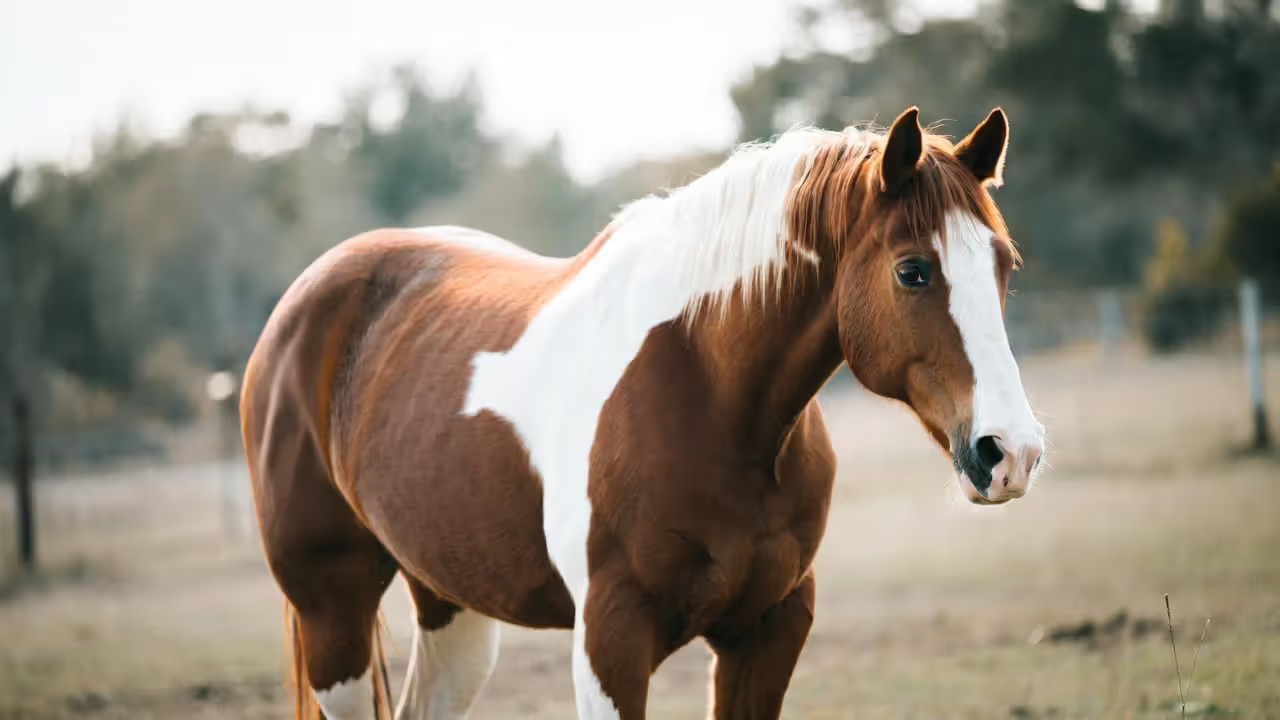
Take Quarter Horse conformation, slap on flashy tobiano or overo coat patterns—you've got Paints. They stand 14.2-16 hands and weigh 950-1,200 pounds. They move like Quarter Horses because genetically they're nearly identical—just colorful versions. The American Paint Horse Association actually requires registered Quarter Horse or Thoroughbred parentage, guaranteeing proven bloodlines underneath those eye-catching patterns.
Color affects pricing dramatically. Some patterns—blue-eyed tobianos or medicine hat markings—command premium dollars. A well-trained solid-colored Paint might fetch $3,000. An identical horse sporting dramatic patterns? $10,000 or more.
They compete in the same events as Quarter Horses. Reining, cutting, Western pleasure, ranch work. They share that calm, trainable disposition too.
Appaloosa
The Nez Perce tribe of the Pacific Northwest developed these spotted horses during the 1700s. They selectively bred for intelligence, stamina, and sure-footedness across mountainous terrain. Modern Appaloosas stand 14-16 hands, weigh 950-1,250 pounds, and display way more variety than just those spotted coats everyone recognizes.
Beyond leopard spots, blanket patterns, and snowflake markings, Appaloosas show mottled skin around eyes and genitals, striped hooves, and visible white sclera—that white part around the iris that's unusual in horses. All these traits result from the leopard complex gene.
Temperament varies more than in Quarter Horses. Some prove steady and reliable. Others show hot-blooded tendencies from Thoroughbred ancestors in their pedigree. They've proven versatile across Western events, English jumping, and trail riding. Prices range $1,000-$10,000 depending on training, bloodlines, and how dramatic their coat pattern looks.
Draft and Heavy Horse Breeds
Author: Nathan Caldwell;
Source: 3templatedesign.site
Clydesdale
Everyone knows these horses from Budweiser commercials. Most don't realize they originated as Scottish farm horses bred for hauling coal in Lanarkshire. Standing 16-18 hands and weighing 1,800-2,200 pounds, Clydesdales actually run smaller than Belgians. They just enjoy greater name recognition thanks to corporate marketing.
Those long "feathers"—the hair flowing from knees and hocks down to hooves—demand daily grooming. Skip it, and you're inviting skin infections called scratches. Despite approaching a ton, they're gentle and surprisingly agile. I've watched Clydesdales execute intricate driving patterns that challenge horses half their size.
That bay coloring with four white socks and a blaze? Classic Clydesdale, but not mandatory. You'll find blacks, browns, even roans. Plan on spending $5,000-$20,000 for quality individuals, plus $400-$600 monthly just for feed. These horses eat like professional linebackers.
Percheron
French aristocrats developed Percherons in the Perche region. These horses reveal their Arabian ancestry through surprisingly refined heads and clean legs—minimal feathering compared to other drafts. They're massive, measuring 15-19 hands and weighing 1,900-2,600 pounds. Most appear gray or black, though other colors exist.
That Arabian blood from medieval times also provided more endurance than other draft breeds possess. Today Percherons pull carriages through city streets, work small farms where tractors can't navigate tight spaces, and even get ridden despite their bulk. They move more freely than most drafts, making them popular for riders wanting majestic draft horse presence without pure draft horse gaits.
Their calm, willing nature suits beginners better than you'd expect. Prices range $3,000-$15,000.
Belgian
The world's strongest horses. Period. Belgians stand 16-18 hands, weigh 1,800-2,400 pounds, and pull loads exceeding 8,000 pounds. Most display characteristic sorrel coloring—reddish-brown body with flaxen mane and tail—though browns and roans also occur.
Belgian breeding focused entirely on pulling power. Speed didn't matter. Agility wasn't important. Just sheer muscle and willingness to lean into a collar. Modern Belgians still work logging operations across terrain too steep or environmentally sensitive for machinery.
They're patient, steady, and so calm that experienced draft horse teamsters consider them easiest to train. But understand their size demands confident handling. A 2,000-pound animal accidentally stepping on your foot isn't being malicious. You'll still need medical attention though.
Gaited and Specialty Breeds
Tennessee Walking Horse
Imagine riding at running speed with zero bouncing. That's the Tennessee Walker's signature running walk—a unique four-beat gait covering ground at 10-20 mph while keeping riders comfortable enough to read a book. (Don't actually read while riding, please.) Tennessee plantation owners developed these horses during the 1800s for overseers spending 12+ hours daily inspecting crops.
Standing 14.3-17 hands and weighing 900-1,200 pounds, modern Walkers dominate trail riding communities. People with back problems especially appreciate that smooth gait. Their gentle, willing temperament suits first-time owners, though show-bred lines sometimes display more energy than trail-bred horses.
Expect paying $2,000-$10,000. Championship bloodlines command six figures.
Morgan
America's first documented breed descended from a single stallion named Figure. Justin Morgan owned this horse in 1790s Vermont. That one horse produced offspring so consistently superior they became their own breed.
Today's Morgans stand just 14.1-15.2 hands and weigh 900-1,100 pounds. Yet they pack more ability into that compact frame than seems physically possible. They've won Olympic dressage medals. Pulled carriages competitively. Worked cattle. Served as cavalry mounts during the Civil War.
That versatility stems from balanced conformation and willing attitudes—they want to work and don't care what job you assign. Their crested necks, animated movement, and proud presence make them eye-catching. Their easy-keeping nature makes them economical—they maintain condition on 20-30% less feed than comparable breeds.
Prices start around $2,500 for untrained youngsters, reaching $15,000+ for proven performers.
Standardbred
These harness racing specialists either trot or pace (a lateral gait) at speeds exceeding 30 mph. Standing 14-16 hands and weighing 800-1,000 pounds, they resemble slightly stockier Thoroughbreds—which makes sense, since Thoroughbreds feature prominently in their ancestry.
The name comes from early speed standards. Horses had to cover a mile in set time to qualify for registration. Retired racers transition beautifully to riding and pleasure driving. They've got Thoroughbred-like athleticism with calmer, more forgiving temperaments.
Years of racing selection eliminated unsound horses. Standardbreds typically have excellent bone and fewer soundness issues than other racing breeds. Off-track Standardbreds cost just $500-$3,000, giving budget-conscious buyers quality horses needing career changes. Many excel at competitive trail riding, dressage, and jumping after retraining.
How to Choose the Right Breed: Comparing Temperament, Size, and Discipline
Author: Nathan Caldwell;
Source: 3templatedesign.site
Picking the wrong breed wastes money and creates frustration. A 5'2" beginner purchasing a 17-hand hot Thoroughbred faces completely different challenges than that same person buying a 14.2-hand Morgan.
Start with honest skill assessment. Beginners need horses forgiving inconsistent leg pressure, wonky hand positions, and occasionally contradictory cues. Quarter Horses, Morgans, and Haflingers excel here. They interpret what you meant, not what you actually signaled. Intermediate riders handle more sensitive breeds like Arabians or well-trained Thoroughbreds. Advanced riders possess timing and experience for young horses or hot-blooded individuals requiring precise communication.
Your physical size creates real limitations. Weighing 220 pounds and riding a 14.2-hand Arabian stresses that horse's back and legs unfairly. You need 15+ hands and substantial bone—think Quarter Horse, draft cross, or larger Warmblood. Conversely, a petite 5' rider may struggle mounting a 17-hand horse and controlling all that mass. Draft crosses often provide middle ground: calmer than Thoroughbreds, more manageable than pure drafts.
Discipline requirements narrow options fast. Want competitive dressage? You need elevated movement, natural collection, and trainability—Warmbloods, Andalusians, or talented Thoroughbreds fit this description. Barrel racing? You're looking at Quarter Horses and Paints with explosive acceleration. Trail riding prioritizes calm minds and sure feet—Tennessee Walkers, Morgans, and Appaloosas dominate here. Jumping demands scope and bravery, pointing toward Thoroughbreds and Warmbloods.
You can train any breed for any discipline. Fighting natural aptitudes makes progress frustratingly slow though.
Maintenance demands differ dramatically between breeds. High-strung horses need daily exercise. Skip a day, and you're riding a firecracker. Horses with heavy leg feathering require obsessive grooming or you'll fight chronic skin infections. Hard-keeping breeds like Thoroughbreds need expensive feed programs—$100+ monthly in grain alone. Easy keepers like Morgans maintain condition on grass hay and basic supplements.
Heat-adapted breeds struggle through northern winters without extra blanketing and shelter.
Budget beyond purchase price. That $2,000 grade horse and $25,000 Warmblood both need farrier work ($50-$150 every 6-8 weeks), feed ($150-$400 monthly), veterinary care ($500-$2,000 yearly for routine care), and boarding if you lack property ($200-$800 monthly depending on location). Over 20 years, routine care costs $100,000-$200,000 regardless of purchase price.
However, breeds prone to specific issues—laminitis in ponies, navicular in Quarter Horses, metabolic disorders in Morgans—may add thousands in veterinary expenses.
Breed
Height (hands)
Weight (lbs)
Temperament
Experience Level
Primary Use
Monthly Maintenance
Purchase Price
Quarter Horse
14-16
950-1,200
Steady, forgiving
Beginner-Advanced
Western disciplines, ranch work
$250-$400
$3,000-$10,000
Thoroughbred
15-17
900-1,100
Reactive, sensitive
Intermediate-Advanced
Track racing, show jumping, eventing
$350-$500
$500-$50,000+
Arabian
14.1-15.1
800-1,000
Sensitive, people-oriented
Intermediate
Distance riding, showing
$300-$450
$2,000-$20,000
Morgan
14.1-15.2
900-1,100
Willing, versatile
Beginner-Advanced
All-purpose, harness driving
$250-$400
$2,500-$15,000
Paint
14.2-16
950-1,200
Steady, cooperative
Beginner-Advanced
Western events, trail
$250-$400
$1,500-$15,000
Tennessee Walker
14.3-17
900-1,200
Gentle, smooth-gaited
Beginner-Intermediate
Trail, pleasure riding
$250-$400
$2,000-$10,000
Appaloosa
14-16
950-1,250
Variable temperament
Beginner-Advanced
Western, trail, jumping
$250-$400
$1,000-$10,000
Clydesdale
16-18
1,800-2,200
Patient, gentle
Intermediate-Advanced
Draft work, driving, parades
$400-$600
$5,000-$20,000
Percheron
15-19
1,900-2,600
Calm, willing
Intermediate-Advanced
Draft work, driving, riding
$400-$600
$3,000-$15,000
Haflinger
13.2-15
800-1,300
Friendly, hardy
Beginner-Intermediate
Driving, trail, children's mounts
$250-$400
$3,000-$10,000
Standardbred
14-16
800-1,000
Steady, adaptable
Beginner-Intermediate
Harness driving, pleasure
$250-$400
$500-$5,000
Friesian
15-17
1,200-1,400
Willing, people-focused
Intermediate
Dressage, driving
$350-$500
$10,000-$50,000+
Rare and International Horse Breeds Worth Knowing
Friesian (Netherlands)
All-black Friesians stand 15-17 hands with manes, tails, and leg feathers so long they nearly touch the ground. Their high-stepping trot—called "knee action"—and baroque appearance make them stunning under saddle or in harness. Medieval knights rode Friesians into battle. Modern riders show them in dressage and pleasure driving.
Their willing, people-oriented nature suits intermediate riders, though you need skill managing that powerful movement. Small breeding populations mean limited genetic diversity. Some bloodlines carry dwarfism, hydrocephalus, and aortic rupture genes. Always get pre-purchase veterinary exams including genetic testing.
Prices start at $10,000 for young, unproven horses and climb past $50,000 for championship bloodlines.
Andalusian (Spain)
Compact and powerful at 15-16.2 hands and 900-1,100 pounds, Andalusians feature naturally elevated movement, thick manes, and predominantly gray coloring. (They're born dark and lighten with age.) Spanish monasteries preserved these horses for centuries, breeding specifically for classical dressage movements. That selection created horses collecting naturally, performing haute école movements, and possessing exceptional trainability.
They're smart—sometimes too smart. Andalusians remember everything. Good training sessions and bad ones. Consistency matters more with these horses than with more forgiving breeds.
Beyond dressage, they work cattle in Spanish-style bullfighting and excel at baroque riding. Expect paying $10,000+ for grade individuals, $50,000+ for pure Spanish breeding (Pura Raza Española).
Icelandic Horse (Iceland)
Don't call them ponies. Icelanders get offended. These 13-14 hand horses perform five distinct gaits including the tölt (a four-beat lateral gait smooth enough to carry drinks) and the flying pace (a two-beat lateral racing gait hitting 30 mph).
Iceland's geography isolated these horses for 1,000+ years. No horses can be imported. Exported horses can never return. That isolation created exceptional disease resistance and genetic purity.
Icelandics grow thick double coats for brutal winters, making them supremely cold-hardy but prone to overheating in southern climates. Their friendly, curious nature and sure-footedness suit beginners and trail riders perfectly. North American prices run $5,000-$15,000, reflecting import costs and limited breeding stock.
Haflinger (Austria)
Picture a golden horse with platinum mane and tail. That's every Haflinger. These Austrian horses stand 13.2-15 hands, weigh 800-1,300 pounds, and combine pony sturdiness with horse capabilities. Mountain pack work originally shaped them, creating strong backs, sure feet, and steady temperaments.
Modern Haflingers work in therapeutic riding—their steady nature and comfortable width suit disabled riders—along with driving competitions, trail riding, and light draft work. They're incredibly people-oriented. Almost dog-like in their affection. Makes them wonderful family horses.
Their longevity exceeds most breeds. 30+ years is common. The downside? They love food and get fat easily, requiring careful weight management. Prices range $3,000-$10,000.
Akhal-Teke (Turkmenistan)
These metallic-coated horses stand 14.2-16 hands with an otherworldly shimmer. Their hair structure reflects light like metal. Turkmen tribes bred them for desert warfare, creating horses with thin skin, sparse hair, and legendary endurance. They survive on minimal food and water, making them perfect desert horses but challenging in humid climates.
Athletic and refined, they excel at dressage, endurance riding, and show jumping. Temperament-wise, they're one-person horses. Loyal and affectionate to their chosen human. Aloof or suspicious toward others. That's not a flaw—it's selective bonding evolved over centuries.
Rarity outside Turkmenistan keeps prices high: $15,000-$100,000+ depending on bloodlines and training.
Marwari (India)
Those inward-curving ear tips touching at the points? That's your Marwari identifier. These 14-16 hand horses descend from war horses ridden by Indian royalty, valued for bravery and stamina. Most Marwaris perform a natural four-beat ambling gait comfortable for hours of riding—crucial when you're inspecting vast estates or traveling long distances.
Export restrictions kept Marwaris rare in the West until recently. India now allows limited exports, but you'll pay premium prices: $10,000-$25,000 for horses available in the US. Their hardiness, natural gaits, and unique appearance attract riders wanting something different from European or American breeds.
Physical and Behavioral Characteristics That Distinguish Breeds
Body Types and Conformation Differences
Walk up to a Thoroughbred and a Belgian. You don't need breed expertise spotting the difference. Conformation—how horses are built—varies dramatically based on historical purpose.
Light horses like Thoroughbreds, Arabians, and Quarter Horses have refined bones, long sloping shoulders (around 45-degree angles), and smooth, long muscles built for speed. Their pasterns—the bone between hoof and fetlock—angle at 45-50 degrees, providing shock absorption at speed. Hip angles provide power for forward propulsion. Everything about their build prioritizes efficient movement. They're sports cars.
Draft breeds are 18-wheelers. Massive bone structure, upright shoulders (60+ degree angles), and heavily muscled hindquarters optimize pulling power. Their straighter pasterns sacrifice comfort for structural stability under load. Shorter cannon bones—the bone between knee/hock and fetlock—resist stress better than long, refined cannon bones. Those upright shoulders create choppy gaits unsuitable for comfortable riding but perfect for collar work. The angle lets them push into a collar without restricting breathing.
Gaited breeds show unique features supporting their special gaits. Tennessee Walkers have longer backs and more horizontal croups—top line of hindquarters—than trotting breeds, facilitating that gliding running walk. Icelandic horses' short backs and powerful hindquarters enable collected gaits and weight-carrying despite small size.
Head shapes tell stories too. Arabians' dished faces result from distinctive skull architecture. They have one fewer vertebra and one fewer rib pair than other horses. Draft breeds' large, wide-set eyes provide excellent peripheral vision needed when pulling implements—they need seeing what's beside them. Clydesdales often have Roman noses (convex profiles), while Thoroughbreds typically show straight profiles.
Coat Colors and Markings by Breed
Some breeds come in any color. Others are picky about their paint jobs.
Haflingers allow only one color: chestnut with flaxen (cream to white) manes and tails. End of discussion. Friesians must be solid black, though small white stars are permitted. Cleveland Bays—an English carriage breed—must be bay (brown body with black points). Breed rules make these colors non-negotiable for registration.
Other breeds link identity to patterns rather than base colors. Appaloosas display leopard spotting (white base with dark spots throughout), blanket patterns (white over hips and croup with or without spots), snowflake (dark base with white spots), and various combinations. These patterns result from the leopard complex gene, which also causes those mottled skin patches and striped hooves.
Paints and Pintos show tobiano patterns (rounded white patches crossing the topline, white legs, dark head) or overo patterns (irregular white not crossing the back, often white face, usually dark legs). These patterns come from completely different genes than Appaloosa spotting. Mixing Paint and Appaloosa doesn't intensify patterns—it creates genetic confusion.
Some breeds limit but don't eliminate colors. Thoroughbred registries reject horses with excessive white or pinto patterns even with verified parentage. Quarter Horse associations won't register horses with certain white patterns. These restrictions preserve breed type and confirm parentage. Before DNA testing, unusual colors suggested incorrect parentage.
Primitive markings—dorsal stripes down the spine, zebra striping on legs, shoulder bars—appear in breeds like Norwegian Fjords, various dun-colored horses, and some Mongolian breeds. These patterns reflect ancient genetics predating selective breeding. They often correlate with hardy constitutions and sure-footedness.
Temperament Patterns and Trainability
Horses bred for war needed different minds than horses bred for farms. Those historical purposes still echo in modern temperaments.
War horses—Andalusians, Friesians, Arabians—required bravery, responsiveness to subtle cues, and strong bonds with riders. You can't have a horse that spooks at sword clashes or refuses to charge. Those breeds remain bold, sensitive to rider aids, and intensely people-focused.
Ranch horses like Quarter Horses and Paints needed calm, practical minds for 12-hour workdays sorting cattle. They had to think independently but cooperate willingly. Modern examples retain that patient, forgiving nature. They tolerate learning mistakes without getting upset.
Racing breeds got selected purely for speed and competitive drive. Thoroughbreds and Standardbreds that fled threats fastest survived predators in the wild and won races in domestication. That reactive nature—running first, thinking later—persists today. They're not stupid or crazy. They're wired for instant flight responses. Experienced riders channel that energy productively. Novice riders get scared and frustrated.
Trainability depends on intelligence plus willingness. Highly intelligent breeds—Arabians, Morgans, Andalusians—learn incredibly fast. You can teach them new skills in days rather than weeks. But they also remember poor training forever and problem-solve ways to evade work they dislike.
Less reactive breeds—Norwegian Fjords, Haflingers—learn slower but forgive inconsistent training and remain steady under pressure.
The terms "hot-blooded" (Arabian, Thoroughbred), "cold-blooded" (draft breeds), and "warm-blooded" (European sport horse crosses) describe temperament and reactivity, not actual body temperature. Hot-bloods react instantly, need experienced handling, and excel at high-performance work. Cold-bloods stay calmer, think slower, and forgive handler mistakes. Warm-bloods blend these traits—brave enough for competition, sensible enough for amateur riders.
Common Mistakes When Selecting a Horse Breed for Your Needs
Author: Nathan Caldwell;
Source: 3templatedesign.site
Buying with your eyes instead of your brain trips up countless buyers. That stunning black Friesian looks magnificent. But if you're a beginner wanting casual trail rides in Florida, you've made a terrible choice. Friesians' powerful, elevated movement requires skilled riding to manage. Their thick coats and heavy feathering make Florida summers miserable without extensive grooming and climate control.
A plain bay Quarter Horse serves that rider's actual needs infinitely better, even if it lacks dramatic presence. Buy for function first, appearance second.
Overestimating your riding skills creates dangerous mismatches. Novice riders buying young, green-broke Thoroughbreds get two inexperienced beings learning together—accidents waiting to happen. Horses aren't born knowing their jobs. They need training from experienced riders. Only after years of consistent work do they become "push-button" mounts suitable for beginners.
New to riding? Buy a trained horse with a forgiving temperament regardless of breed. Save the sensitive, high-performance breeds for after developing solid skills.
Ignoring climate requirements causes welfare problems and expensive bills. Heavily coated Icelandics suffer in southern heat without careful management—shade structures, fans, body clipping, adjusted work schedules. Thin-skinned Thoroughbreds and Arabians struggle through northern winters without blankets, shelter, and potentially heated barns.
While horses adapt to various climates somewhat, forcing them to fight their natural physiology creates unnecessary stress and expense. Choose breeds suited to your climate or budget for extensive accommodation.
Forcing square pegs into round holes frustrates everyone. Asking a 17-hand Percheron to excel at competitive show jumping fights basic physics and breeding. Similarly, expecting a 15-hand Arabian to pull loads like a draft horse ignores physical limitations.
Sure, individual horses sometimes defy breed stereotypes. You'll find Arabians that jump well or Quarter Horses excelling at dressage. But you're betting against probability. Match breed strengths to your discipline, and training progresses smoothly.
Skipping health research leads to expensive surprises. Quarter Horses in certain bloodlines carry genes causing HYPP (hyperkalemic periodic paralysis—causes muscle tremors and collapse) and HERDA (hereditary equine regional dermal asthenia—skin literally separates from underlying tissue). Some Appaloosa lines show congenital night blindness. Friesian dwarfism, hydrocephalus, and aortic rupture affect specific bloodlines.
Genetic testing before purchase identifies carriers, preventing heartbreak and veterinary bills that can reach tens of thousands.
Focusing only on purchase price misses the financial big picture. That $1,000 grade horse seems economical until you discover it needs $500 monthly in specialty feed to maintain weight, plus $200 for metabolic supplements controlling insulin resistance. Meanwhile, a $5,000 easy-keeping Morgan thrives on basic care costing $250 monthly.
Over a 20-year lifespan, the "cheap" horse costs $60,000 more in routine maintenance. Factor lifetime costs, not just upfront price.
FAQ: Your Horse Breed Questions Answered
What is the calmest horse breed for beginners?
Quarter Horses win this category hands-down, followed closely by Morgans and Haflingers. Centuries of ranch work bred exceptional patience into Quarter Horses. They tolerate beginners bouncing around the saddle, giving conflicting signals, and making typical novice mistakes without getting upset or scared.
Morgans combine gentle dispositions with versatility, handling everything from trail riding to showing with steady attitudes. Haflingers bring pony-level sturdiness with horse capabilities, plus they're exceptionally friendly and forgiving.
Draft breeds like Percherons and Clydesdales are also calm, though their size intimidates some beginners. Here's the truth though: individual temperament matters more than breed. A well-trained 15-year-old horse of any breed typically suits beginners better than a green-broke 4-year-old of the "calmest" breed. Age, training, and individual personality trump breed stereotypes.
Which horse breeds are best for jumping vs. dressage vs. trail riding?
Jumping success requires scope (ability to clear height), bravery, and athleticism. Thoroughbreds, Warmbloods (Hanoverians, Holsteiners, Dutch Warmbloods, Oldenburgs), and Irish Sport Horses dominate upper-level show jumping. Their long legs, powerful hindquarters, and bold temperaments let them tackle 5'+ fences without hesitation.
Dressage demands naturally elevated movement, collection ability, and exceptional trainability. Warmbloods rule Olympic-level dressage, with Andalusians, Lusitanos, and talented Friesians also competing successfully. These breeds move with suspension and expression that makes piaffe and passage look effortless.
Trail riding prioritizes sure-footedness, calm minds, endurance, and comfort. Quarter Horses, Morgans, Tennessee Walkers, Arabians, and Appaloosas excel here. Gaited breeds like Tennessee Walkers and Icelandic horses provide especially comfortable multi-hour rides.
Many horses successfully cross disciplines. Breed characteristics create natural advantages in specific areas though.
How much does breed affect a horse's lifespan and health issues?
Breed impacts longevity significantly. Smaller horses and ponies—Arabians, Morgans, Haflingers, Welsh ponies—commonly live 25-35 years. Quarter Horses and Thoroughbreds typically reach 25-30 years with proper care. Giant draft breeds average shorter lifespans, usually 18-25 years, because their massive size stresses hearts and joints more than smaller frames.
Breed-specific conditions vary widely. Quarter Horses in certain lines risk navicular disease, HYPP, and HERDA. Pony breeds prone to easy weight gain face laminitis risks. Draft breeds carry genes for EPSM (equine polysaccharide storage myopathy, a muscle disease). Some Appaloosa lines develop specific cancers more frequently than other breeds.
However, individual care, nutrition, workload, and luck affect lifespan more than breed alone. I've known draft horses reaching 30 and Arabians dying at 15 from colic. Genetics load the gun. Management pulls the trigger.
Finding your perfect horse means matching breed characteristics to your actual situation instead of fantasy. Each breed carries centuries of purposeful development shaping its build, movement, temperament, and care requirements.
Quarter Horses bring versatility and steady minds ideal for beginners and working riders. Thoroughbreds offer unmatched athleticism for experienced competitors willing to manage their sensitivity. Draft breeds provide gentle power for driving and farm work. Gaited breeds deliver comfortable trail miles for pleasure riders.
Success starts with honest self-assessment. What's your real skill level? What do you actually want doing with this horse? What's your genuine budget including 20 years of maintenance? What climate do you live in?
Beginners buying trained, calm Quarter Horses or Morgans set themselves up for safe, enjoyable learning. Advanced riders seeking competitive dressage success with carefully selected Warmbloods or Andalusians make equally sound choices. The "best" breed doesn't exist universally—only the best breed for your specific situation.
Research breed-specific health concerns before buying. Understand realistic lifetime costs, not just purchase prices. Prioritize temperament and training over flashy appearance.
Visit multiple horses. Ride different breeds. Consult professionals before committing thousands of dollars and decades of your life. Whether ending up with a colorful Paint, a sturdy Haflinger, or an elegant Arabian, making informed choices based on breed characteristics rather than impulse creates partnerships lasting 20+ years.
Do homework now. You'll avoid expensive mistakes later.
Choosing your first horse ranks among the most exciting—and nerve-wracking—decisions you'll make as an equestrian. The right breed can transform your learning curve from frustrating to fulfilling. This comprehensive guide examines ten horse breeds consistently praised for their beginner-friendly characteristics.
When you stand beside a Shire or Belgian Draft, the sheer scale becomes immediately clear—these animals tower over standard riding horses. Learn what separates true giants from merely big horses, from measurement standards to breed-specific characteristics and care requirements.
Content on 3templatedesign.site is provided for general informational and educational purposes only. The information on this website may include topics related to horse care, feeding, grooming, horse breeds, training methods, riding techniques, and common horse health conditions.
This content is not intended to be veterinary, medical, training, or professional animal care advice. Horse ownership and riding involve responsibilities and potential risks for both riders and animals.
Users are responsible for evaluating their own experience, equipment, and the condition of their horse before applying any information from this website. Use of this website does not create any professional, veterinary, or advisory relationship with trialstribulations.net.
We are not responsible for any injuries, damages, or losses resulting from the use of information provided on this website. Horse owners and riders are encouraged to consult qualified veterinarians, trainers, or equine professionals when making decisions about horse care or training.