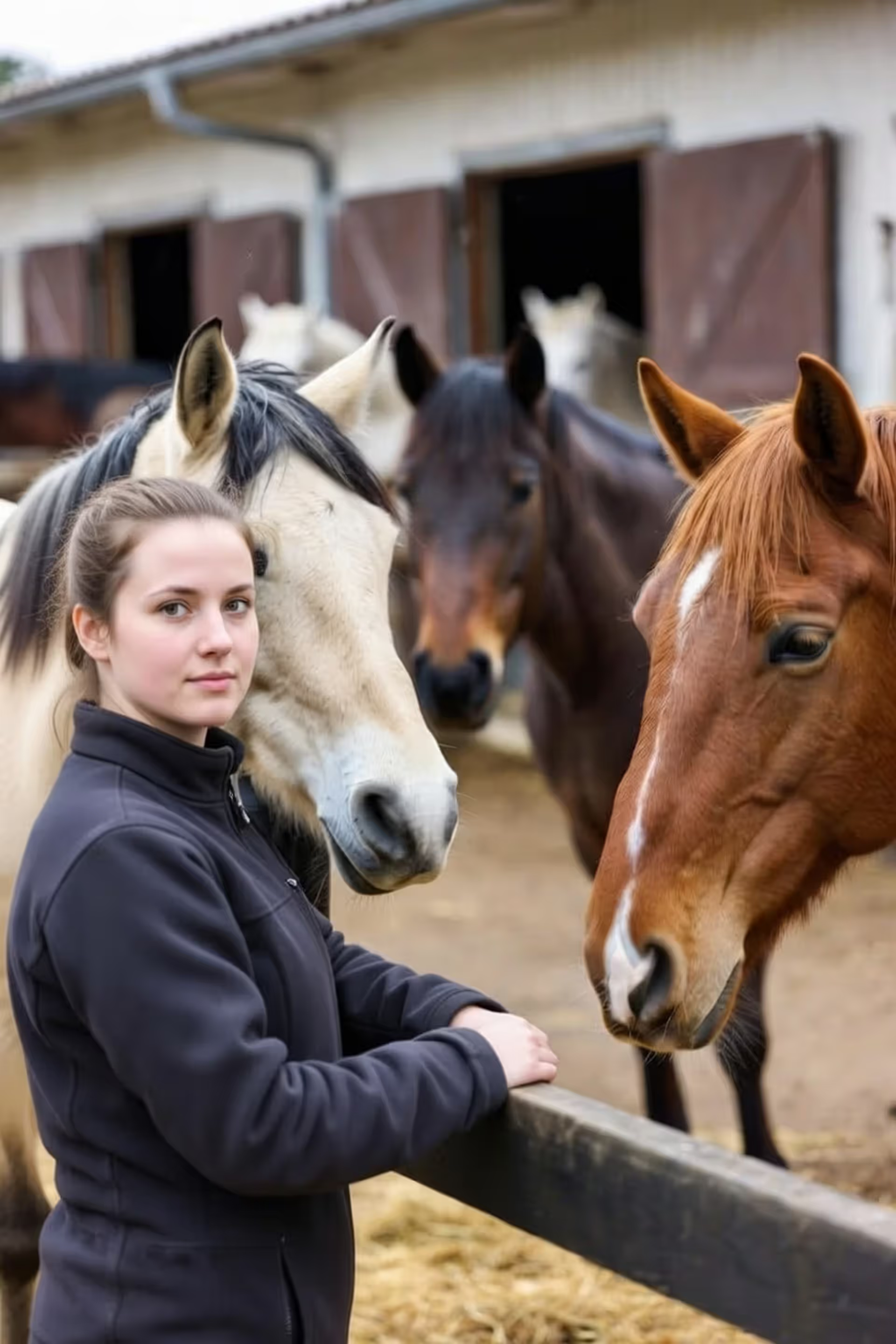
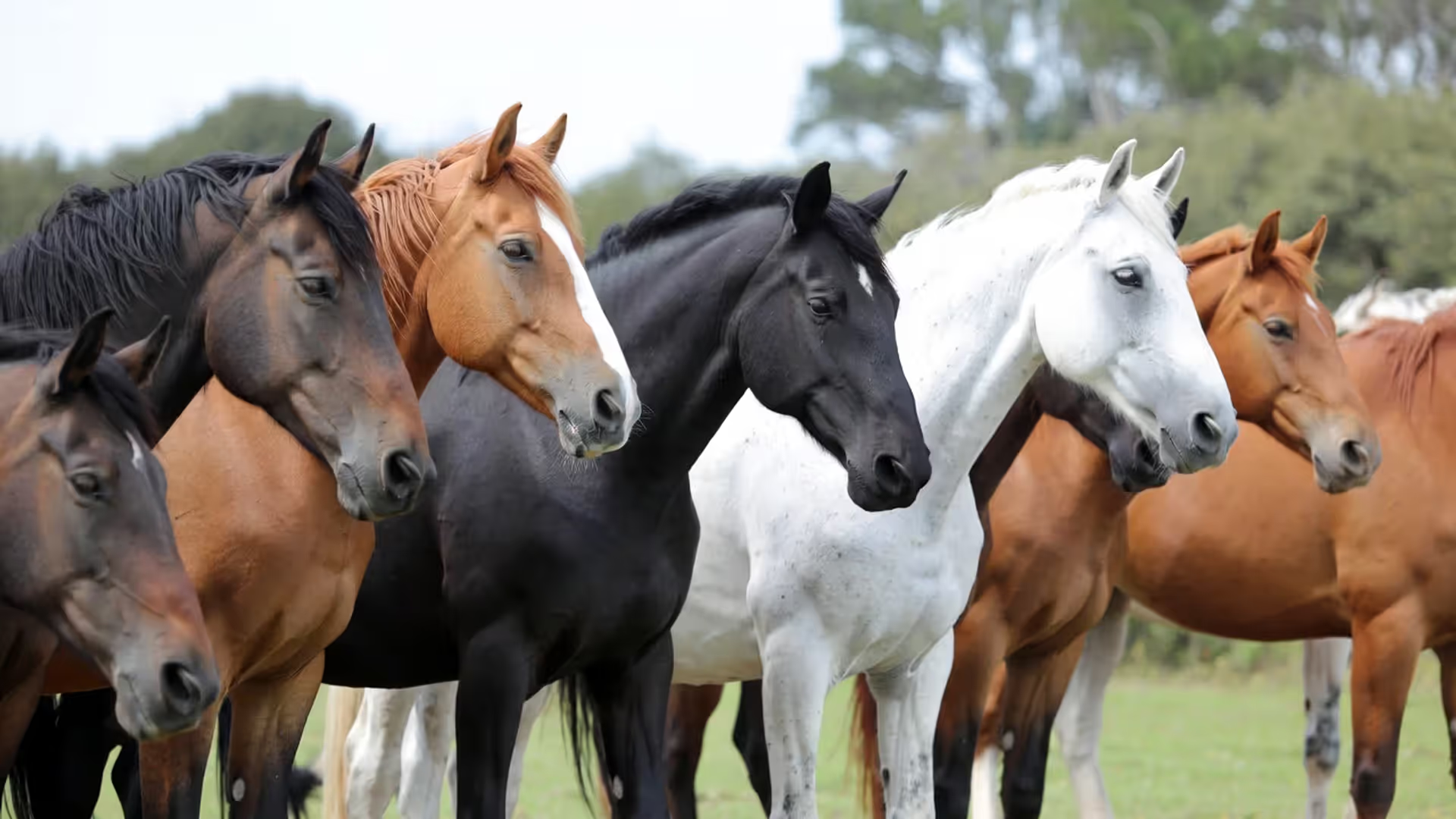
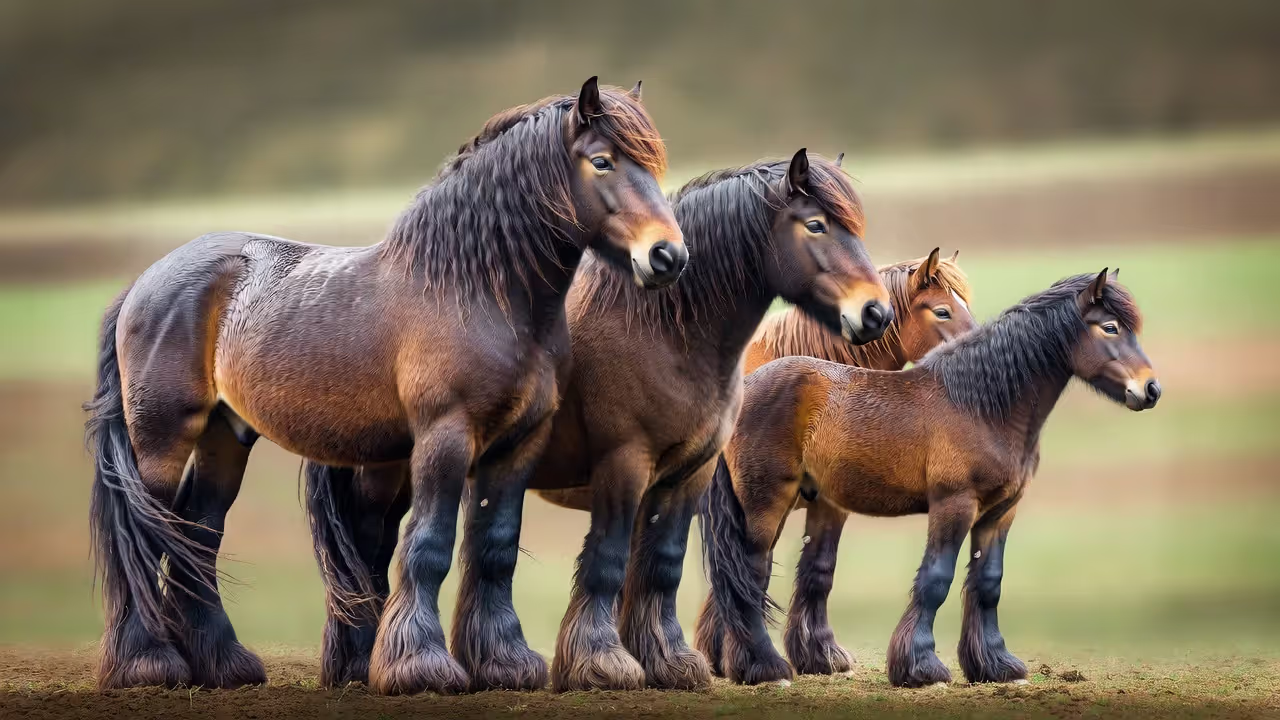
Ever walked up to a Shire horse at a county fair? Your first thought is probably "That's not a horse, that's a small elephant." These animals make regular horses look like ponies. Their hooves are literally bigger than dinner plates—I've measured. And when you're standing next to one, their shoulders come up to most people's chins or higher.
If you're thinking about buying one of these giants, working with draft horses professionally, or just can't get enough of watching videos of massive horses online, you'll want to know what actually makes one breed larger than another. It's not as simple as "big vs. bigger."
What Qualifies a Horse Breed as "Large"? Understanding Size Measurements
Here's a weird fact: horses get measured in hands. Why? Because hundreds of years ago, that's literally what breeders used—the width of a human hand. Today, one hand equals exactly four inches. You measure from the ground straight up to the withers, which is that bony ridge where the neck meets the back.
So when someone tells you their horse is 17 hands, do the math: 17 × 4 = 68 inches. That's 5 feet 8 inches at the shoulder. Add the neck and head, and you're looking at an animal whose ears are eight or nine feet off the ground.
Your average riding horse? Somewhere between 14.2 and 16 hands. Draft horses don't even start until you're past 16 hands, and the real behemoths are all 17+ hands. But here's the thing—height only tells part of the story.
A Thoroughbred racehorse might weigh 1,000 pounds. Draft horses? They're regularly 1,800 pounds or more. Some tip the scales past 2,400 pounds. That's more than a Toyota Corolla.
It's not just about being tall, either. You can have a tall, skinny horse—think of those long-legged Warmbloods. The true giants are tall AND built like brick houses. Stocky. Massive. When you measure the cannon bone (that's the lower leg bone, between the knee and the ankle), regular horses measure around 7-8 inches in circumference. Draft breeds? Over 10 inches. Their legs are genuinely thicker than most people's calves.
Shire Horses: The Tallest Breed in the World
Author: Emily Harrington;
Source: 3templatedesign.site
Want to know about the tallest horse ever officially measured? Sampson, a Shire gelding born in 1846. This absolute unit stood 21.2 hands—that's 86.5 inches, or seven feet and change at the shoulder. He weighed somewhere around 3,360 pounds. They literally renamed him Mammoth because "Sampson" didn't seem adequate. Modern Shires don't get quite that extreme, but they're still the tallest breed you'll find.
Average Height and Weight Statistics
Walk into a Shire breeding barn today, and you'll see stallions averaging 17.2 hands. Mares run a bit smaller—16.2 to 17 hands is typical. Weight-wise, you're looking at anywhere from 1,800 pounds on the lighter end to 2,400 pounds for a well-built stallion. Some exceptional individuals push past 2,600 pounds.
Here's something interesting: the Shire breed standard doesn't cap height. Taller is better, as long as everything stays proportional. You won't get penalized in the show ring for being too tall.
Physical Features That Define the Shire
Look at a Shire's head and you'll notice it's surprisingly refined for such a massive animal. Long and lean, often with a slightly Roman nose, but never heavy or coarse-looking. The neck arches elegantly—and when I say elegantly, I mean for a horse that weighs as much as a small car. That neck connects to sloping shoulders, which actually gives them pretty decent agility considering their size.
The back stays relatively short compared to overall body length. Broad loins, wide and muscular hindquarters—everything about their build screams "pulling power."
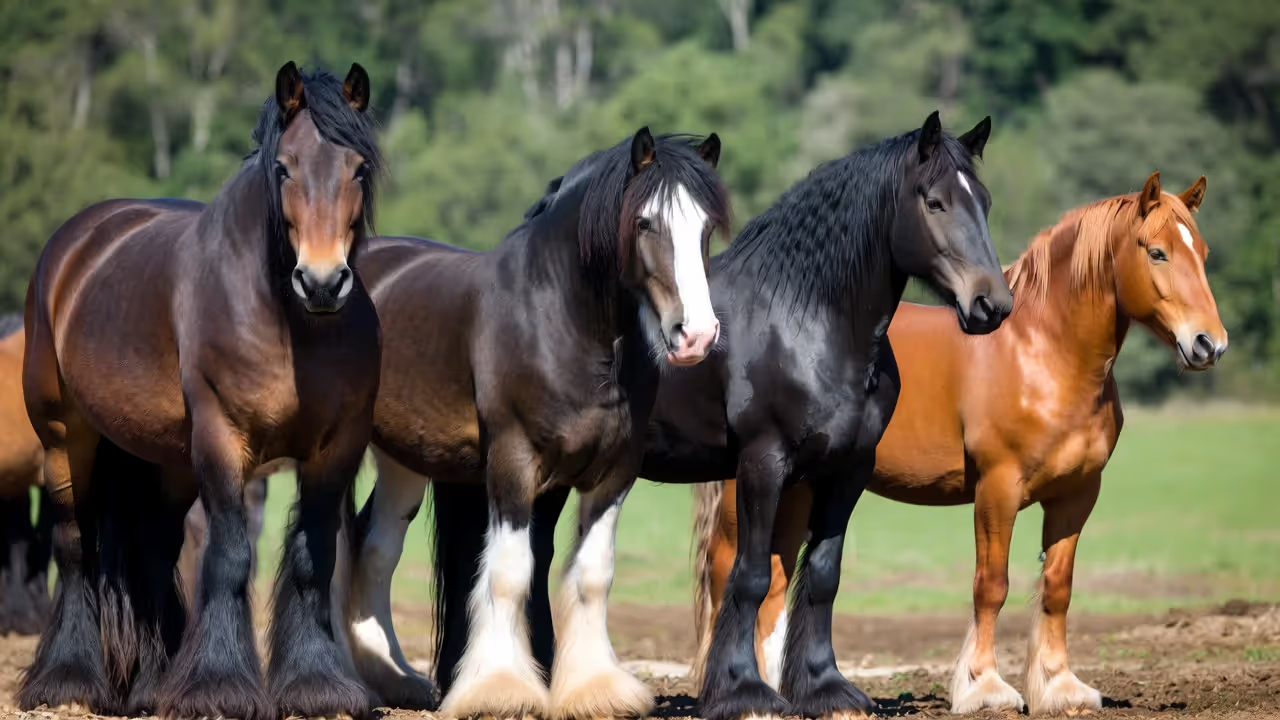
Now let's talk about the feathering. That's the long, silky hair that grows on their lower legs, starting at the knees and hocks and cascading down over their hooves. On a good Shire, this feathering is so thick you can't even see the hoof from the side. It flows like a silk curtain.
Color-wise, you'll see black most commonly, along with bay, brown, and gray. Chestnut exists but it's rare, and serious breeders tend to avoid it. White markings show up all over the place—big blazes on the face, white socks or stockings on the legs. Some Shires have so much white they look almost paint-colored.
Temperament and Common Uses Today
People see a Shire's size and assume they must be dangerous or hard to handle. I've been an equine vet for three decades, and honestly? Shires are some of the easiest horses I work with. They're patient, they want to please you, and they're often safer around beginners than those high-strung Arabians half their size.
— Dr. Jennifer Hartmann, Equine Veterinarian, Midwest Draft Horse Center
These days, Shires work in logging operations—particularly on terrain where you can't get a tractor in. They pull wedding carriages. They compete in breed shows where judges evaluate their build and movement. Some people even ride them, though good luck finding a saddle that fits an 18-hand horse with a back as wide as a kitchen table.
Their steady, calm nature makes them stars in therapeutic riding programs. Kids with disabilities benefit from that rock-solid, predictable gait.
Clydesdale vs. Shire: How These Giant Breeds Compare
Thanks to Budweiser's marketing budget, Clydesdales are probably the most recognized draft horses in America. This leads lots of people to assume they're the biggest horses out there. They're absolutely huge—just not quite Shire-level huge.
Here's the real comparison:
Feature
Shire
Clydesdale
Typical Height Range
17-19 hands (68-76 inches)
16-18 hands (64-72 inches)
Weight Range
1,800-2,400 pounds
1,600-2,200 pounds
Overall Build
Blockier, maximum mass throughout
Leaner build, legs proportionally longer
Leg Hair
Extremely profuse, begins higher up the leg
Very abundant, silkier and more flowing
Usual Colors
Black, bay, brown, gray predominate
Bay with white is classic; also brown and black
Facial Structure
Longer with slight convex profile
Straighter, more chiseled appearance
Country of Origin
England's Midlands
Scotland's Clydesdale valley
On average, you're looking at Clydesdales being about a hand shorter and roughly 200 pounds lighter than Shires. Their leg length relative to body height creates a flashier way of moving—that high-stepping trot you see in parades. This made them perfect for city delivery routes back in the day. All that flashy action caught people's attention on crowded streets.
Shires, bred mainly for farm work, move more economically. Lower action, less wasted motion, which matters when you're pulling a plow for ten hours straight.
Both breeds are gentle giants. If you're choosing between them as a potential owner, the Clydesdale might be marginally easier to manage purely because of the size difference. Plus, they're more common in North America, which means farriers and vets have more experience working on them.
Complete Ranking of Heavy Horse Breeds by Size
These are the genuine giants—the breeds that make regular horses look like ponies.
Breed Name
Height Range (hands)
Typical Weight (pounds)
Where They're From
What They Were Bred For
Shire
17-19
1,800-2,400
England
Plowing heavy clay soil, hauling
Belgian Draft
16.2-18
1,800-2,200
Belgium
Farm labor, heavy freight
Clydesdale
16-18
1,600-2,200
Scotland
Farm work, urban hauling
Percheron
16-17.3
1,900-2,600
France
Medieval war, later farm work
Suffolk Punch
16.1-17.2
1,980-2,200
England
Agricultural work
Dutch Draft
15.2-17
1,500-1,700
Netherlands
Heavy farm work, hauling
Australian Draught
16.2-17.2
1,320-1,980
Australia
Farm operations, hauling
American Cream Draft
15-16.3
1,600-1,800
United States
General farm work
Ardennes
15.3-16.1
1,600-2,200
France/Belgium border
War horses, farm labor
Belgian Draft Horse
Belgians compete with Shires for the title of "most massive horse," even though they're typically a bit shorter. What they lack in height, they make up in sheer width. These horses are built like barrels. Absolutely massive hindquarters. Legs like tree trunks. The most popular color is this light chestnut shade with a flaxen (creamy white) mane and tail, though you'll also find roan, bay, and darker chestnuts.
Brooklyn Supreme, a Belgian gelding from the 1940s, weighed 3,200 pounds and stood 19.2 hands. Modern Belgians don't usually hit those numbers, but 2,000-pound individuals are everywhere. These horses dominate pulling competitions, where teams compete to haul weighted sleds. Their low, powerful movement pattern makes them naturals for this.
Percheron
Percherons are the athletes of the draft horse world. They originated in France's Perche region as war horses—they needed to carry knights in full armor while still being nimble enough for battle. You can see that heritage in their build. Cleaner legs with minimal feathering compared to Shires or Clydesdales. More refined heads. They just look sleeker overall.
Despite averaging slightly shorter than Shires, Percherons often weigh more. Their bone density is remarkable. A 17-hand Percheron might weigh 2,400 pounds while a Shire of identical height comes in at 2,100. Most are either gray or black—those are the traditional colors. Their smooth gaits and willing attitude make them the most commonly ridden draft breed.
Suffolk Punch
Every Suffolk Punch is chestnut—and the breed standard actually spells it "chesnut" with one 's'. There are seven recognized shades, from dark liver to bright copper. They're shorter and blockier than Shires, with shoulders that look like they could pull down a building. Very little leg feathering, which made them popular with farmers who worked in muddy conditions.
The breed nearly died out in the 1960s. Numbers dropped below 100 horses. Conservation programs have brought them back from the brink, but Suffolks are still rare.
Farmers loved their efficiency—Suffolks needed less feed than other draft breeds to maintain condition. Plus, many lived and worked well past age 20, which is exceptional longevity.
Dutch Draft
The Netherlands created this breed in the early 1900s by crossing Belgians with native Dutch horses. The result? Massively muscled, compact animals with phenomenally calm temperaments. You'll see mostly bay, chestnut, or gray.
They're not common outside Europe, though small breeding populations exist in North America. Many stand under 16.2 hands, but they're so heavily muscled they almost look square when you view them from the side.
Australian Draught Horse
When settlers arrived in Australia, they needed powerful horses for the harsh conditions. They mixed Clydesdales, Percherons, Shires, and Suffolk Punches to create the Australian Draught. Because of those varied origins, individual horses can look quite different depending on which foundation breeds dominate their pedigree.
Most stand between 16.2 and 17.2 hands, weighing 1,320 to 1,980 pounds. They're known for heat tolerance—essential in Australia—and sound legs. The breed remains primarily Australian, with few exported.
American Cream Draft
This is the only draft breed that originated in the United States. It all started with a cream-colored mare of unknown breeding in Iowa around 1900. The distinctive appearance comes from the champagne gene: cream-colored coat, pink skin, amber eyes, white or cream mane and tail. It's genetically different from palominos or buckskins.
American Creams run smaller than most draft breeds—many mares stand around 15 hands. The breed is critically endangered with fewer than 500 registered horses. Breeders are working hard to maintain genetic diversity while preserving that unique coloring and gentle disposition.
Ardennes
This is one of the most ancient draft breeds. Julius Caesar wrote about these horses in his accounts of the Gallic Wars—that's how far back they go. They're compact and heavily muscled, with feathered legs and this characteristic "double-muscled" look in the hindquarters.
Ardennes horses are incredibly tough, adapted to the brutal mountain climate of the Ardennes region that straddles France and Belgium. They mature faster than most draft breeds and can start working younger. Common colors include bay, roan, chestnut, and palomino.
Why Draft Horses Grew So Large: Breeding History and Purpose
Author: Emily Harrington;
Source: 3templatedesign.site
Contrary to popular belief, medieval war horses weren't massive. Knights rode destriers that stood maybe 14-15 hands—big for that era, but nothing like modern draft horses. The real giants emerged later, bred not for war but for farming.
The agricultural revolution of the 1600s and 1700s created massive demand for horses that could pull plows through heavy clay soil. Haul loaded wagons on terrible roads. Work from sunrise to sunset without quitting. Farmers started selectively breeding the biggest, strongest horses they had. Smaller horses didn't get bred. Over generations, this relentless selection pressure created animals exceeding 17 hands and 2,000 pounds.
Different regions developed different types based on what they needed. English farmers in the Midlands breeding Shires needed maximum size and weight for plowing deep clay. Scottish breeders developing Clydesdales worked rockier ground where agility mattered alongside strength. French Percheron breeders wanted horses that could plow fields but also trot smartly when pulling carriages on improved roads.
Agricultural mechanization in the 1900s nearly wiped out draft breeds. Tractor companies actively encouraged farmers to get rid of their horses—some offered trade-in programs where horses were literally slaughtered. Breed numbers crashed. England had over a million Shires in 1900; by 1960, fewer than 3,000 remained.
Enthusiasts saved breeding stock, and interest has grown in recent decades. Draft horses now work in sustainable logging operations, on organic farms that avoid mechanization, and in tourism. Show competitions judge breeding stock on conformation and movement. These breeds survive today not because they're economically necessary, but because people value their heritage and presence.
Caring for Giant Horse Breeds: Space, Feed, and Cost Considerations
Author: Emily Harrington;
Source: 3templatedesign.site
Owning a draft horse isn't just owning a bigger version of a regular horse. Everything scales up—and not just proportionally. Some costs and requirements jump exponentially.
Space needs: Your typical 1,000-pound horse needs roughly one acre of decent pasture during growing season. A 2,000-pound draft horse needs at least two acres, preferably three, to maintain condition without supplemental hay. Stalls must be at least 12×12 feet—12×14 or 14×14 is better. And doorways? Standard 8-foot barn doors often don't work. Many draft horses have to duck to get through, which they hate.
Feed expenses: A draft horse in moderate work eats 25-35 pounds of hay daily, plus 8-12 pounds of grain depending on workload and hay quality. At $8 per 60-pound square bale, you're looking at $200-$280 monthly just for hay. Add grain at $20 per 50-pound bag, and total feed costs run $250-$350 per month. That's double what a riding horse costs to feed.
Farrier bills: Draft horse shoes are custom-forged, requiring more steel and more time to make and fit. A trim runs $60-$80. Full shoeing? $200-$300 every six to eight weeks. And good luck finding a farrier with draft horse experience—in some areas, you'll pay travel fees to get someone qualified.
Vet costs: Medication doses are based on weight, so dewormers, vaccines, and treatments all cost more. Anesthesia for surgery requires specialized equipment—some vet clinics literally can't handle horses over 1,800 pounds. Emergency colic surgery on a draft horse can run $15,000 or more, compared to $8,000 for a smaller horse.
Health problems to watch for: Draft breeds are prone to chronic progressive lymphedema (CPL), which causes progressive swelling in the lower legs. It's particularly common in heavily feathered breeds. There's no cure, and it gets worse over time. Polysaccharide storage myopathy (PSSM) affects many draft breeds, causing muscle pain and tying-up episodes. It's manageable through diet but requires careful attention.
Then there's shivers—a neurological problem that causes involuntary muscle tremors, especially in the hind legs. Draft breeds get it more than lighter horses. Nobody knows what causes it, and there's no treatment.
One advantage though: draft breeds are generally easy keepers. They evolved to work on modest feed rations. Many gain weight easily. Owners often struggle more with keeping them from getting fat than with maintaining condition. And a fat draft horse is at serious risk for laminitis, joint problems, and metabolic disorders.
Frequently Asked Questions About the Largest Horse Breeds
What is the largest horse breed ever recorded?
That would be Sampson, a Shire gelding foaled in 1846 in Bedfordshire, England. He measured 21.2 hands (86.5 inches, or 7 feet 2.5 inches at the shoulder) and weighed approximately 3,360 pounds. They renamed him Mammoth because the original name seemed inadequate. No modern horse has come close to this size. The current record holder for tallest living horse usually stands around 20-20.3 hands—still extraordinary, but shorter than Sampson. Big Jake, a Belgian gelding who died in 2021, stood 20.2 hands and held the Guinness record for over a decade.
Are Clydesdales bigger than Shires?
No, Shires are larger. On average, Shires stand about one hand taller and weigh roughly 200 pounds more than Clydesdales. Typical Shire height runs 17-19 hands with weights of 1,800-2,400 pounds. Clydesdales average 16-18 hands and 1,600-2,200 pounds. People often think Clydesdales are the biggest because of the Budweiser Clydesdales' high visibility in advertising and parades. Both breeds are absolutely massive, but Shires consistently outsize Clydesdales in both height and weight.
How much does it cost to feed a draft horse per month?
Budget $250-$350 monthly for a draft horse in moderate work. This breaks down to 25-35 pounds of hay daily (running $200-$280 per month at typical prices) plus 8-12 pounds of grain (another $50-$70 monthly). Prices vary by region and hay quality. Horses in heavy work need more grain. Horses on good pasture during growing season need less hay. Winter feeding typically costs more than summer feeding in most climates.
Can draft horses be ridden, or are they only for pulling?
You can absolutely ride draft horses. Plenty of people do. Their smooth walk and calm temperament make them comfortable trail mounts. But their size creates challenges. Finding saddles that fit their extremely wide backs is tough. Mounting requires either a very tall mounting block or someone to give you a boost. Their trot can be jarring because of their size and build. Most people who ride draft horses stick to walking or very collected gaits. Percherons have smoother gaits than other draft breeds and are the most commonly ridden.
The world's largest horse breeds represent hundreds of years of selective breeding for size, strength, and temperament. Shires consistently rank as the tallest, routinely exceeding 18 hands. Belgians and Percherons match or surpass them in weight despite being slightly shorter. These breeds differ in more than just measurements. Clydesdales move with flashier action. Percherons blend size with surprising athleticism. Suffolk Punches offer efficiency and exceptional longevity.
For anyone considering ownership, these differences matter. A Shire requires more space and feed than a Clydesdale, and both need substantially more resources than standard horses. Health concerns specific to draft breeds—from chronic progressive lymphedema to PSSM—demand awareness and management. Farrier and veterinary expenses exceed those for lighter horses. Specialized equipment becomes necessary, from saddles to trailers.
Yet people who work with these gentle giants consistently call the experience rewarding. Their calm temperament, eagerness to work, and commanding presence create bonds that justify the extra effort and expense. Whether pulling a plow on a sustainable farm, giving carriage rides at historic sites, or simply grazing peacefully in a pasture, these massive horses connect us to agricultural heritage while proving that sometimes, bigger really is better—at least when it comes to heart, hooves, and history.
Choosing your first horse ranks among the most exciting—and nerve-wracking—decisions you'll make as an equestrian. The right breed can transform your learning curve from frustrating to fulfilling. This comprehensive guide examines ten horse breeds consistently praised for their beginner-friendly characteristics.
Choosing the right horse starts with understanding what makes each breed unique. From compact Quarter Horses to towering Clydesdales, each breed brings distinct physical traits, temperaments, and abilities shaped by centuries of selective breeding for specific purposes.
Content on 3templatedesign.site is provided for general informational and educational purposes only. The information on this website may include topics related to horse care, feeding, grooming, horse breeds, training methods, riding techniques, and common horse health conditions.
This content is not intended to be veterinary, medical, training, or professional animal care advice. Horse ownership and riding involve responsibilities and potential risks for both riders and animals.
Users are responsible for evaluating their own experience, equipment, and the condition of their horse before applying any information from this website. Use of this website does not create any professional, veterinary, or advisory relationship with trialstribulations.net.
We are not responsible for any injuries, damages, or losses resulting from the use of information provided on this website. Horse owners and riders are encouraged to consult qualified veterinarians, trainers, or equine professionals when making decisions about horse care or training.