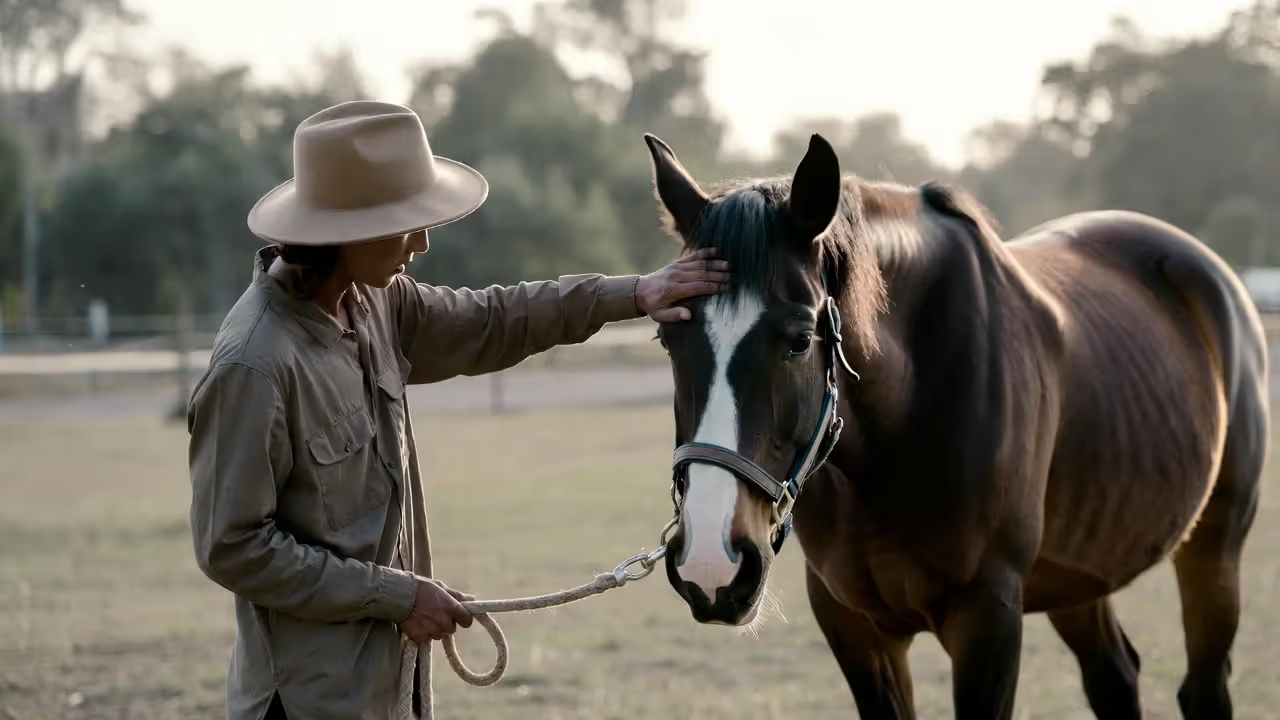
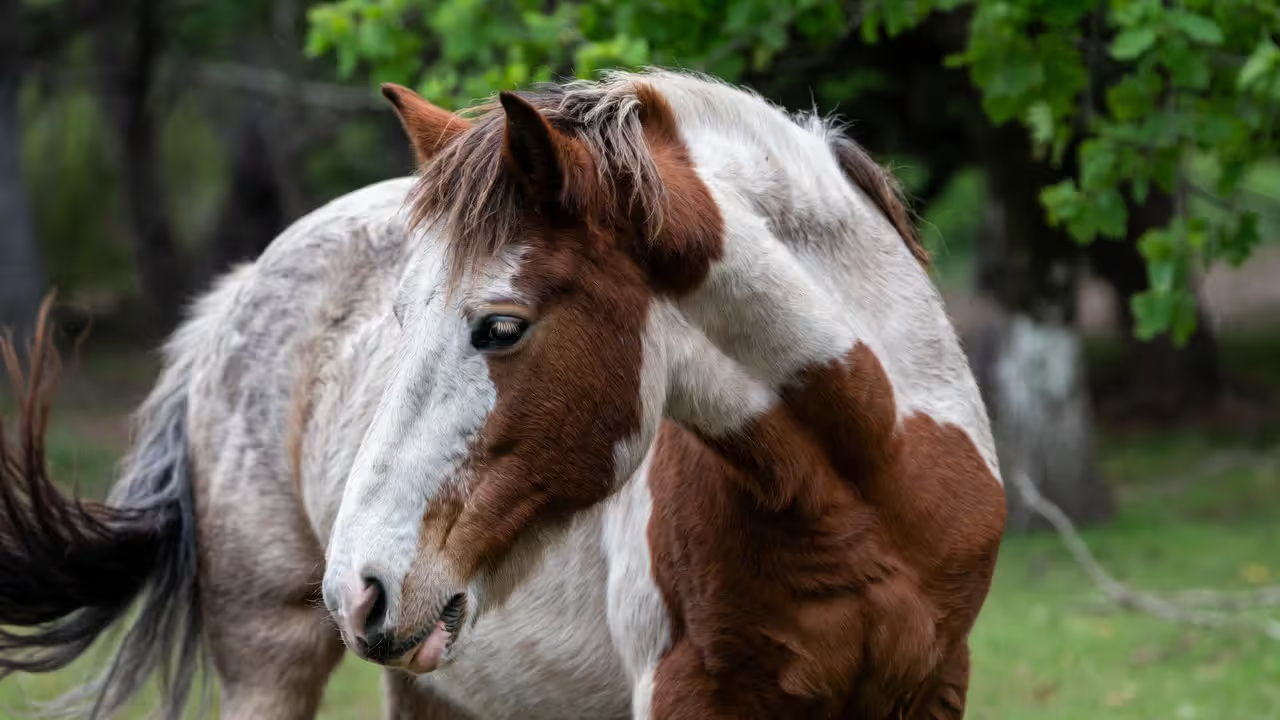
Picture this: You're headed out for your evening barn check when something stops you cold. Your usually hungry mare stands motionless in the corner, ignoring her hay. She keeps glancing back at her sides with a worried expression you've never seen before. Your stomach drops because you know what this might mean.
Around 900,000 horses deal with colic annually in the United States alone. The USDA's most recent equine mortality study found that nearly one in three horse deaths traces back to some form of abdominal crisis. Here's the encouraging part, though—veterinarians estimate that owners could prevent roughly 70% of these episodes through straightforward management adjustments.
The horse's digestive system presents unique challenges. Where we can simply vomit if something disagrees with us, horses lack that safety valve entirely. Their gut stretches approximately 100 feet from mouth to tail, featuring sharp anatomical curves, bottleneck passages, and a fermentation chamber (the cecum) that processes up to 10 gallons of feed material. Nature designed this setup brilliantly for wild horses grazing 18 hours daily on sparse prairie grass. Confine that same system to a stall with twice-daily grain meals, and you're asking for trouble.
What Is Colic and Why It's the Leading Cause of Death in Horses
Here's what surprises many new horse owners: "colic" isn't actually a disease. Think of it as a symptom—specifically, belly pain. That pain might stem from something as minor as intestinal gas that'll pass in 30 minutes, or something as catastrophic as a twisted colon that needs a surgeon's hands within three hours to save the horse's life.
Emergency veterinary clinics report that four out of every ten urgent calls involve suspected colic cases. When horses need surgery, survival odds swing wildly depending on what surgeons find—anywhere from 50% to 85% make it through, with timing playing the deciding role in most cases.
Wild horses evolved as constant grazers, nibbling and walking nearly nonstop. Their guts work best with steady, small amounts of fiber trickling through. Compare that to how many domestic horses live: 22-23 hours confined to 12x12 stalls, eating concentrated grain rations twice daily, maybe exercising an hour if they're lucky. We've basically taken a Ferrari engine and forced it to idle in stop-and-go traffic all day.
Consider the small intestine's construction—it dangles freely through the abdominal cavity, anchored at just its beginning and end. Those 70 feet of unsecured intestine can shift, rotate, and trap itself. Blood supply gets kinked off. Tissue starts dying. The clock starts ticking fast.
The large intestine ferments roughage using billions of bacteria that maintain a delicate balance. Dump in rich spring grass after months of winter hay, or switch grain brands without transition, and you've just nuked that bacterial ecosystem. Die-off releases toxins. Inflammation begins. Pain follows. Meanwhile, the large colon's sharp U-turn at the pelvic flexure creates a natural trap where dehydrated feed balls up into concrete-hard blockages.
Recognizing the Warning Signs: Common and Severe Colic Symptoms
Author: Garrett Holloway;
Source: 3templatedesign.site
Time literally means everything here. A horse showing quiet discomfort at lunch might need emergency surgery by dinner if a section of gut has twisted. Learning which symptoms mean "keep watching" versus "get the vet here now" can mean the difference between life and death.
Mild to Moderate Symptoms Every Owner Should Monitor
Early warning signs often whisper rather than shout. Your gelding who usually mugs you for treats barely sniffs his grain. The mare who nickers every feeding time stands facing the wall instead. These personality shifts matter even when nothing looks dramatically wrong.
Watch for periodic ground pawing—not constant, just occasional. The horse might curl back to bite or stare at his flanks. You'll see stretching postures that look like urination attempts, but nothing comes out. Some horses lie down more frequently than their normal routine. Lip curling or drooping the head unusually low also signal discomfort.
Check gut sounds by pressing your ear against the belly wall. Healthy intestines produce rumbles, squeaks, and gurgles every minute or two. Silence feels eerie and usually means trouble.
Gas-type discomfort often shows a distinctive pattern: the horse grazes peacefully for ten minutes, paws and circles for two minutes, then returns to grazing. That intermittent quality suggests gas pockets stretching the intestinal wall as they move along and eventually dissipate.
Emergency Red Flags That Require Immediate Veterinary Attention
Grab your phone and dial immediately if your horse starts violent rolling—repeatedly throwing himself down and thrashing. This behavior screams severe pain that's overcome the horse's survival instinct. Older advice claimed rolling caused gut twists, but researchers now know the sequence runs the other way: the twist happens first, causing unbearable pain that triggers thrashing. Still, violent rolling risks injuries to both horse and anyone nearby.
Heavy sweating on a cool day spells trouble. Check the heart rate by feeling the pulse under the jaw—anything above 60 beats per minute means cardiovascular distress. Pull back the upper lip and examine gum color. Healthy gums look bubble-gum pink and feel wet. Dark red, purple, or white gums combined with sluggish capillary refill (press your thumb on the gum and see how fast pink color returns—should be under two seconds) indicate shock.
Some horses assume bizarre postures trying to relieve abdominal pressure: sitting like a dog, or standing with front legs stretched forward and hind legs tucked underneath. Continuous, relentless pain that walking doesn't touch usually signals strangulating blockage where blood supply has been cut off. Every hour without surgery kills more intestinal tissue and tanks survival odds.
Complete gut silence on both sides, paired with obvious pain, suggests ileus—total intestinal shutdown. This escalates to life-threatening within hours.
The 7 Most Common Causes of Colic in Horses
Author: Garrett Holloway;
Source: 3templatedesign.site
Understanding what causes colic in horses lets you target prevention where it matters most. The majority of cases fit into seven recognizable patterns.
Impaction colic happens most often during cold snaps when water intake drops. Certain feeds create higher risk: Coastal Bermuda hay's coarse stems, wheat bran fed dry, rice bran without adequate moisture. The material packs down at the pelvic flexure like wet sand in a bucket. Senior horses with worn teeth who can't chew properly face extra risk since they swallow large, poorly processed hay chunks.
Gas colic results from fermentation gone haywire. Picture a massive spring pasture turnout after months on dry hay—all that lush grass hits the hindgut and triggers a bacterial feeding frenzy, producing gas faster than the intestine can handle it. Moldy hay or sudden grain increases do the same thing. Pain comes in waves matching gas pocket movement, then temporarily subsides before the next wave hits.
Displacement and torsion strike with terrifying randomness, often in horses with zero colic history. The large colon swings over the nephrosplenic ligament on the left side, or worse, rotates completely on its axis, strangling its own blood supply. Some evidence points to intense exercise immediately after large meals as a risk factor—competing blood flow demands between full digestive organs and working muscles might allow the colon to shift positions.
Parasites cause fewer problems than in decades past thanks to modern dewormers, but they haven't vanished. Large strongyle larvae still migrate through mesenteric arteries, damaging blood vessels that feed the intestines. Tapeworms cluster at the junction between small and large intestine, creating partial blockages. Young horses occasionally develop ascarid impactions when deworming kills massive adult roundworm loads all at once, and dead worms clog the small intestine.
Sand accumulation plagues horses in Florida, Arizona, Southern California, and other sandy regions. Feeding on the ground lets horses ingest sand with every bite. The sand settles in the lowest part of the large colon where it causes chronic inflammation and eventual blockage. Some barns test manure in glove technique: mix fresh droppings with water in a clear bag or glove, hang it up, and watch whether sand settles to the bottom over five minutes.
Stress and management changes mess with digestion through multiple pathways. Shipping to shows, introducing new herd members, confining an injured horse to stall rest, or even moving a new horse into the adjacent paddock can alter gut motility. Stress hormones redirect blood away from the digestive tract and slow intestinal contractions to a crawl.
Feed-related triggers go beyond simple diet changes to include feeding practices. Horses getting grain on empty stomachs, those fed just twice daily in massive meals, or horses with unpredictable feeding schedules show elevated colic rates. The classic "barn manager left the feed room unlocked and the pony gorged itself" scenario can produce fatal grain overload within hours as rapid hindgut fermentation releases catastrophic toxin levels.
What to Do When Your Horse Shows Colic Symptoms: First Response and Treatment Options
How you handle the first half-hour shapes everything that follows. Stay calm, protect yourself from a thrashing horse, and collect information your vet needs to make decisions.
Pull all feed buckets and hay nets immediately. Leave water buckets unless your veterinarian specifically says otherwise. If you can safely do it, gather baseline vital signs: count heartbeats for 15 seconds and multiply by four (normal range: 28-44 beats per minute). Count breaths the same way (normal: 10-24 per minute). Take rectal temperature if you're comfortable doing so (normal: 99-101°F). Check gum color and moisture, and time capillary refill. Press your ear to the belly on both sides and listen for at least a minute—note whether you hear active gurgles or ominous silence.
Should you walk a colicky horse? Depends entirely on pain levels and the individual horse's response. Easy hand-walking for 10-15 minutes can distract mild discomfort and potentially encourage gas movement. It also keeps you right there monitoring changes and prevents rolling in dangerous spots. But never force-march a horse in severe pain—you're adding stress without fixing anything, plus risking injury. If the horse wants to lie quietly without violent thrashing, let him rest while waiting for the vet. Never exhaust a colicky horse with endless walking. If pain increases during movement or the horse becomes impossible to control safely, stop and secure him in a safe space.
Veterinarians treating colic in horses start with comprehensive physical examination including rectal palpation—reaching into the rectum to feel intestinal positioning, masses, displacements, or distension. Passing a nasogastric tube (through the nostril into the stomach) serves double duty: diagnostic and therapeutic. Horses with small intestinal blockage reflux several gallons of nasty-smelling fluid backward into the stomach. Draining this pressure prevents stomach rupture and often brings immediate relief.
Medical management combines pain control (flunixin meglumine—you probably know it as Banamine—reduces pain and blocks endotoxin effects), muscle relaxants (buscopan stops intestinal spasms), IV fluids for rehydration and softening impactions, and mineral oil pumped through the nasogastric tube to lubricate intestinal contents. Somewhere between 60-70% of colic cases resolve with medical treatment over 12-48 hours.
Surgery becomes necessary when medical treatment fails, pain breaks through medication, or diagnostics reveal strangulating obstruction. Veterinarians weigh multiple data points: heart rate and cardiovascular parameters, abdominal ultrasound showing thickened or non-moving intestine, persistent stomach reflux, elevated protein or lactate in abdominal fluid taps. Large colon torsion or strangulating lipoma (fatty tumors on stalks that wrap around intestine like a noose) offer 60-80% survival when surgeons operate promptly. Wait too long—more than 8-10 hours—and survival rates crater as intestinal tissue dies and dumps endotoxins into the bloodstream.
12 Proven Strategies to Prevent Colic in Your Horse
Author: Garrett Holloway;
Source: 3templatedesign.site
Prevention costs pennies compared to treatment and spares your horse misery. These evidence-based strategies slash risk, though nothing eliminates it completely since horses will be horses.
Keep water accessible and appealing 24/7. Most horses drink 5-10 gallons daily, more in summer heat or when eating dry hay. Scrub tanks and buckets weekly—algae and floating debris make horses reluctant to drink. During winter freezes, either install heated automatic waterers or smash ice and refill buckets at least three times daily. University of Pennsylvania research found horses preferred insulated buckets over automatic waterers when temperatures dropped below freezing, drinking 15-20% more from buckets.
Always offer hay before grain. This simple timing shift protects against multiple colic types simultaneously. Hay creates a fibrous buffer in the stomach that regulates grain passage into the small intestine, preventing fermentation explosions in the cecum and colon. Target 1.5-2% of body weight in forage daily—that's 15-20 pounds for a 1,000-pound horse, closer to 20-25 pounds for an easy keeper who needs to stretch meals out.
Transition all diet changes slowly over one to two weeks minimum. This includes new hay deliveries from different farms, switching grain brands, and spring pasture turnout. Start with 75% old feed mixed with 25% new, shift to 50/50 after three days, then 25% old with 75% new, finally 100% new feed. Abrupt switches massacre beneficial bacteria populations and allow pathogenic species to explode.
Base parasite control on fecal egg counts, not calendar dates. Work with your vet to test individual horses and target deworming to high shedders. Low shedders can maintain light parasite burdens, which actually helps prevent resistance development. Include praziquantel for tapeworms once annually—those don't show up well in standard fecal counts, but they cause real problems at the ileocecal junction.
Provide daily turnout and exercise without exception. Movement stimulates intestinal motility through mechanical massage and increased blood flow. Horses on enforced stall rest show dramatically higher colic rates. If injury prevents turnout, hand-walk multiple times daily for at least 15-20 minutes per session. Even that limited movement helps.
Feed on a consistent schedule every single day. Horses are creatures of habit to an almost absurd degree. Their digestive systems prepare for incoming feed based on learned routines. Feed within a 30-minute window at the same times daily. Irregular feeding—8 AM one day, noon the next—disrupts digestive enzyme secretion and increases gas production.
Float teeth every 6-12 months depending on age. Sharp enamel points, hooks, waves, and missing teeth prevent proper chewing. Poorly chewed hay forms impactions. Horses over 15 especially need frequent dental work since age-related wear creates uneven surfaces and gaps between teeth.
Minimize stress wherever you control it. Gradual weaning over weeks rather than abrupt separation, slow herd introductions in adjacent paddocks before mixing, consistent handlers, predictable routines—all these protect gut health. During unavoidable stress (showing, shipping, new barn moves), consider high-quality probiotics and obsess over hydration.
Combat sand in endemic areas aggressively. Feed hay from racks, nets, or tubs—never on sandy ground. Give psyllium-based products (like Metamucil for horses) one week per month to bind and clear accumulated sand. Test for sand accumulation by mixing five fresh manure balls with water in a clear plastic bag, letting it sit five minutes—sand settles to the bottom while fiber floats.
Know your horse's normal so you catch deviations early. How many manure piles does he typically produce? (Normal: 8-12 piles per 24 hours.) What's his usual appetite? How does he normally behave at feeding time? Changes often precede obvious colic symptoms by 6-12 hours.
Time exercise around feeding strategically. Skip intense work for at least one hour after grain meals. The engorged stomach and cecum compete with working muscles for blood supply, potentially compromising gut motility. Light walking is fine; galloping intervals or jumping should wait.
Push salt consumption to drive water intake. Offer free-choice loose salt (horses lick blocks more readily than using salt blocks, though both work). Consider top-dressing one tablespoon of regular table salt on each grain meal during hot weather. Horses won't overconsume salt if fresh water stays available—they'll simply drink more, which is exactly the goal.
Colic Type
What Owners Typically See
Pain Severity (1-10 scale)
How Fast It Becomes Critical
Treatment Approach
Expected Outcome
Gas/Spasmodic
Pawing on and off, turning to bite at sides, stretching out, lying down then getting up repeatedly
3-6 (comes and goes)
Most resolve in 2-4 hours; call vet if getting worse or lasting past 2 hours
Less manure than normal, picking at food, steady mild discomfort, some pawing
4-7 (steady)
Builds over 12-48 hours; becomes urgent if pain level jumps
Fluids given through stomach tube, IV hydration, mineral oil via tube, walking, pain meds
Very good if caught early—85-90% avoid surgery
Colon Displacement
Moderate to serious pain, quiet gut sounds, sometimes improves briefly on medication then pain returns
6-8
Need surgical decision within 6-24 hours
Usually needs surgery to reposition colon; occasionally resolves by rolling horse under anesthesia
Good with fast surgery—70-85% survive
Strangulating Blockage
Extreme relentless pain, heart racing over 60 beats/minute, gums turning dark red or purple, drenched in sweat, thrashing violently
9-10 (off the charts)
True emergency—every hour matters critically
Emergency surgery to remove dying intestine and restore circulation
Guarded—50-70% survive depending on how long tissue was oxygen-deprived
Intestinal Inflammation
Depressed attitude, fever, watery diarrhea, moderate pain, dehydration signs, often follows stress or diet change
5-7
12-48 hours before becoming critical with severe dehydration or toxin overload
IV fluids aggressively, anti-inflammatory drugs, antibiotics if bacterial infection suspected, intensive monitoring
Variable—60-80% pull through with aggressive support
Sand Accumulation
Chronic low-grade discomfort, weight loss, occasional diarrhea, sand audible or felt on rectal exam, sometimes visible in manure
3-6 (chronic)
Chronic issue that may suddenly become acute with complete blockage
Psyllium supplements, fluids, pain management; surgery if total obstruction develops
Good when addressed early; fair to guarded if surgery needed
How Much Does Colic Treatment Cost? What Horse Owners Need to Budget
Author: Garrett Holloway;
Source: 3templatedesign.site
Money conversations feel uncomfortable during medical emergencies, but understanding financial reality helps owners make informed decisions under pressure.
Emergency farm calls run $150-400 depending on your location, time of day, and travel distance. After-hours and weekend calls cost premium rates. The initial examination, stomach tube placement, and basic medical treatment (fluids, medications, mineral oil administration) typically total $400-800 for straightforward cases that resolve within 24 hours.
Hospitalization without surgery ranges from $1,500-3,500 based on duration and intensity. Horses requiring continuous monitoring, repeated stomach decompression every few hours, and multiple days of IV fluids land in this category.
Colic surgery costs vary wildly by location and facility type. University teaching hospitals in the Northeast may charge $8,000-15,000 for surgery plus several days of post-operative hospitalization. Private referral hospitals in the Midwest and South often run $5,000-10,000 for comparable services. These figures cover anesthesia, the surgical procedure itself, initial recovery hospitalization, and standard medications but don't include complication management.
Complications happen in roughly 15-20% of surgical cases—adhesions, incision infections, laminitis triggered by endotoxins, or repeat colic episodes. These can double or triple your initial bill through extended hospitalization or additional procedures.
Major medical insurance typically covers colic surgery after a brief waiting period (commonly 14 days for brand-new policies). Annual premiums run $200-600 depending on the horse's insured value, age, and coverage limits. Most policies pay 80% of covered costs after you meet the deductible. Several insurers now offer colic-only surgery policies at reduced premiums—worth considering for horses whose value doesn't justify full mortality and major medical coverage.
Smart owners maintain an emergency fund of $3,000-5,000 minimum per horse. Some veterinary hospitals arrange payment plans or partner with financing companies like CareCredit or Scratchpay. Having the financial conversation with your veterinarian before crisis strikes—discussing your budget constraints and exploring options—reduces panic and allows for planning when emotions aren't running high.
Early recognition and fast veterinary response are the biggest factors determining whether a colicky horse survives. Owners who truly know their horse's normal behavior and vital signs, who don't second-guess themselves about calling when something seems off, give their horses the best survival odds. Honestly, I'd rather examine ten mild colics that resolve within an hour than arrive too late to save one horse whose owner waited and hoped the problem would disappear on its own.
— Dr. Sarah Reuss, DVM
Frequently Asked Questions About Horse Colic
Can a horse recover from colic without a vet?
Some mild gas colic episodes do resolve without veterinary intervention—maybe 20-30% of very minor cases. The problem? Distinguishing truly mild gas colic from early-stage surgical colic is virtually impossible without veterinary examination, diagnostic equipment, and professional experience. Horses that seem to improve then relapse hours later often have serious underlying problems that were progressing all along. The danger of waiting and hoping outweighs the cost of an emergency call every single time. Even if your horse appears significantly better, veterinary examination documents baseline parameters and rules out hidden complications that might develop hours or days later.
How long does colic usually last in horses?
Duration swings dramatically by type and severity. Simple gas colic typically resolves in 30 minutes to 4 hours maximum. Impaction colic might cause low-grade, manageable discomfort for 24-72 hours while treatment gradually softens and moves the blockage through. Surgical lesions cause progressively intensifying pain that continues until surgeons fix the problem—untreated surgical colic doesn't improve. If symptoms persist beyond 2-3 hours despite removing feed and light walking, veterinary evaluation is absolutely warranted. Pain that comes and goes over several days suggests chronic underlying issues like ulcers, sand buildup, or partial obstruction requiring diagnostic workup beyond basic colic examination.
What is the survival rate for colic surgery?
Overall survival to hospital discharge ranges from 60-85% depending on what surgeons find. Large colon volvulus (360-degree twist) carries approximately 60-70% survival. Small intestinal strangulation from pedunculated lipomas or other masses shows 50-65% survival. Simple large colon displacement without compromised blood supply approaches 85-90% survival because minimal tissue damage has occurred. Non-strangulating lesions generally outperform strangulating lesions since tissue remains viable. Timing from symptom onset to surgery dramatically impacts outcomes—horses reaching surgery within 6-8 hours of severe pain onset survive more frequently than those suffering 12+ hours with compromised intestine. Long-term survival (one year post-surgery) runs about 85% of horses who survive initial hospitalization, meaning most surgical colic survivors return to normal work.
Are certain horse breeds more prone to colic?
Research documents some breed predispositions, though individual management factors outweigh genetics. Arabians show elevated rates of certain colic types, possibly related to their proportionally shorter intestinal length relative to body size. Thoroughbreds, particularly those in race training programs, experience higher colic rates attributed to high-grain diets, management stress, and intensive exercise schedules. Draft breeds face increased impaction risk, potentially due to slower intestinal transit times—food moves more slowly through their systems. Miniature horses show disproportionately high sand colic rates since their short stature puts their muzzles right at ground level while grazing, increasing sand ingestion. That said, any horse regardless of breed can colic, and excellent management reduces risk across all breeds.
Colic in horses won't disappear as long as we keep horses. The equine digestive system's evolutionary design paired with modern domestic management creates inherent vulnerability that no amount of care eliminates entirely. But informed, attentive owners who recognize early warning signals, implement evidence-based prevention protocols, and respond decisively when symptoms appear can dramatically slash their horse's risk and substantially improve outcomes when colic does strike.
The strategies outlined throughout this article—obsessive attention to hydration, hay-before-grain feeding, gradual diet transitions over weeks not days, appropriate parasite management, regular exercise, stress minimization, and daily monitoring of normal behavior patterns—create a comprehensive prevention program. No single intervention eliminates risk completely, but each protective layer adds up. Horse owners who implement even five or six of these twelve recommendations will see measurable risk reduction in their barn.
Just as important as prevention protocols: establish a relationship with an equine veterinarian before emergencies strike. Know exactly who to call, program their emergency number into your phone right now, and understand their after-hours call protocols. Schedule a non-emergency conversation discussing your specific horse's individual risk factors and develop a customized prevention plan together. Consider keeping basic supplies readily accessible: a stethoscope for checking heart rate and listening for gut sounds, a digital thermometer, and whatever pain medication your vet recommends keeping on hand for emergency use under phone consultation.
Remember that timing matters more than almost any other single factor in colic survival statistics. The horse whose owner calls at the very first sign of abnormal behavior—before pain becomes obvious—has substantially better odds than the horse whose owner takes a "wait and see" approach for several hours. Trust your gut instincts about your own horse—you know him better than anyone else on earth. When something feels wrong, even if you can't articulate exactly what's off, make the call. Your vigilance paired with prompt professional veterinary care gives your horse the absolute best possible chance of a long, healthy, comfortable life free from this devastating condition.
Laminitis damages the delicate bond between the hoof wall and coffin bone, potentially crippling horses. Understanding how to spot trouble early and respond appropriately can mean the difference between a manageable episode and permanent lameness. Learn the six common triggers and evidence-based prevention strategies.
Content on 3templatedesign.site is provided for general informational and educational purposes only. The information on this website may include topics related to horse care, feeding, grooming, horse breeds, training methods, riding techniques, and common horse health conditions.
This content is not intended to be veterinary, medical, training, or professional animal care advice. Horse ownership and riding involve responsibilities and potential risks for both riders and animals.
Users are responsible for evaluating their own experience, equipment, and the condition of their horse before applying any information from this website. Use of this website does not create any professional, veterinary, or advisory relationship with trialstribulations.net.
We are not responsible for any injuries, damages, or losses resulting from the use of information provided on this website. Horse owners and riders are encouraged to consult qualified veterinarians, trainers, or equine professionals when making decisions about horse care or training.